Tzu Chi Great Love Preschool Philippines celebrates United Nations Day
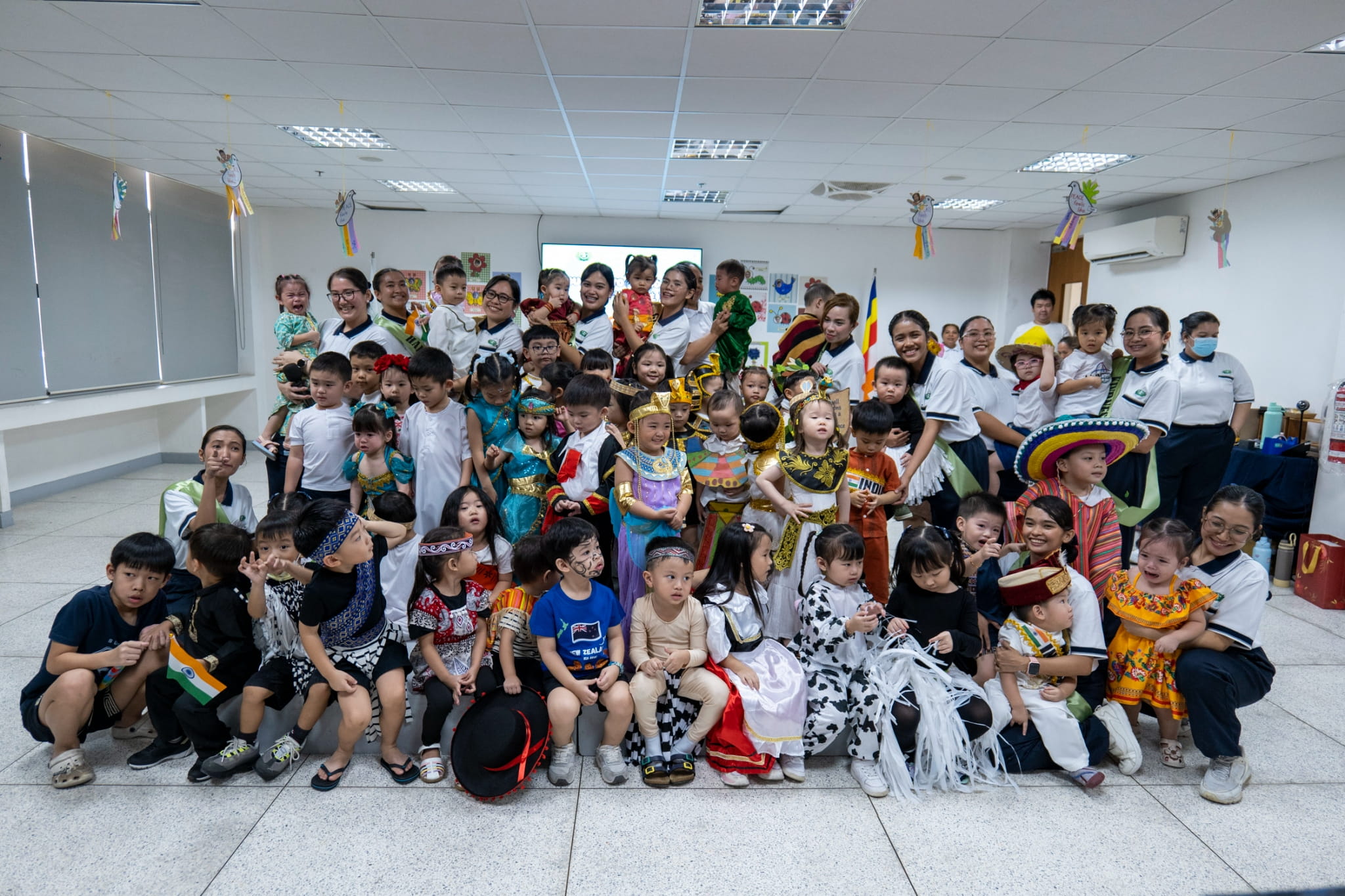
The learners of Tzu Chi Great Love Preschool Philippines pose together in their vibrant cultural costumes.
By Comms Writer 1

Preschoolers explore the cultures and traditions of India, Saudi Arabia, Egypt, Mexico, and New Zealand through interactive booths with games and snacks.
A world of cultures came alive at the Buddhist Tzu Chi Campus in Sta. Mesa, Manila, as preschoolers from Tzu Chi Great Love Preschool Philippines celebrated United Nations Day on October 9, embracing the traditions, food, and heritage of five countries.
The celebration honored the spirit of unity while teaching young learners to appreciate the differences that make each culture unique.
“For this year’s celebration, we focus on unity and honoring the uniqueness of everyone. We celebrate United Nations Day to honor the principles of respect, cultural appreciation, unity, and cooperation among nations,” Assistant Teacher Kate Peralta shared.
The program began with a parade of nations, where preschoolers proudly displayed the traditional costumes of the countries they represented. Teachers also staged a role play highlighting environmental protection and how small efforts can make a meaningful difference. Cultural dances added to the festive atmosphere before the children visited the different booths.
Decorated with displays made from recycled materials, each booth offered a glimpse into the country’s cultural identity through food, crafts, and interactive activities.
Represented by the toddler class, India introduced learners to its rich traditions through colorful clothing, classical dance, and masala chai, a traditional spiced tea made with black tea, milk, and aromatic spices.
The kindergarten class brought Saudi Arabia to life through traditional clothing, including the thobe and abaya, alongside displays of camels and a mosque. The children also introduced visitors to hummus, a chickpea-based dip enjoyed across the Middle East.
The senior nursery class turned its Egyptian booth into an interactive adventure, featuring activities inspired by the country’s history and geography. Children excavated small treasures and artifacts, raced boats along a model of the Nile River, and explored displays of the iconic pyramids. They also introduced shoreek, a traditional Egyptian sweet bread, giving visitors a taste of the country’s food culture.
For Angelica Wang, mother of Jacobson from senior nursery, preparing for the celebration began as early as September, when families started dividing responsibilities and planning their booth, and they are very happy to be able to deliver it.
“Aside from what we want to present today, we also want to teach the children that recycling is important for the sustainability of our future,” she shared.
Another team of senior nursery students representing Mexico introduced children to maracas, percussion instruments commonly associated with Mexican music. Children made their own maracas and participated in activities featuring Mexican colors and animals.
Harold Lim, father of Gimm from senior nursery, helped lead the booth’s entertainment and enjoyed seeing the children engage in the activities. “It was fun because our booth was interactive. We made sure the kids participated and enjoyed,” he shared.
The pre-kindergarten’s New Zealand booth highlighted the country’s rich Māori culture through traditional woven crafts and music featuring haka performances. The displays also emphasized the country’s connection to nature and its unique wildlife.
One featured symbol was the kiwi, a flightless bird native to New Zealand and a beloved national symbol. Through these displays, children gained a glimpse of the country’s cultural heritage and natural wonders.
The celebration concluded with the announcement of the booth awards. Mexico received the Rising Nation Award, while New Zealand took home the Dawn of Nation Award. India placed second runner-up, Egypt was named first runner-up, and Saudi Arabia emerged as the champion. Beyond the competition, the celebration helped nurture the children’s appreciation for diverse cultures and the value of living together in unity and harmony.


“The Nile River has given so much to Egypt, and we want the children to know that water is an integral part of our lives. We also want them to learn to protect it,” she said.