


June 23, 2026
‘What I watched on TV can happen in real life’
By Joy Rojas
On the morning of June 8, in the first-class municipality of Jose Abad Santos, Davao Occidental, Reggie Laurence Danganin was set to teach Grade 8 math on the first day of a new school year at Kalbay National High School. Rodrigo Masurin Moda Sr. was attending a copra meeting in Sitio Balete, about 8 km from Kalbay. A resident of Barangay Butulan, Nesita Yato was at her brother’s house in another village for a cash-for-work opportunity.
Then, at 7:37 am, a magnitude 7.8 earthquake struck Sarangani and surrounding provinces in southern Mindanao.
Seventy seconds after the violent shaking stopped, nothing in Jose Abad Santos was what it used to be. Structures made of light materials and concrete collapsed, many beyond repair. Roads cracked and split open as the ground shifted and swayed. The quake also triggered a coastal uplift, raising the seabed that made waters recede. And the boulders from landslides blocked a river from flowing, depriving certain areas of water while creating deep lake-like formations in other parts.
Relating the incidents that followed to Tzu Chi Foundation volunteers who conducted an ocular visit on June 17, Moda remembers scrambling to get home to his wife Inriza. But no tricycle drivers would take him because they were too scared to venture out after what had just happened.
“So, I just walked,” said the 74-year-old. “All the buildings that I passed were already destroyed. When I got here, the wall of the school was totally damaged.”
At home, he called out to Inriza, who assured him that she was okay. God only knows how he would have reacted had she not replied. “When I saw her coming towards me, we just cried and cried,” he said. “Not tears of sorrow but of joy because nothing happened to us.”
Yato, 45, thought of her spouse as well, a fisherman who was left at home. Later, she would find out that he ran outside and stayed by the seashore until the ground stopped shaking.
She, however, was hit on the head by falling cement and tripped as she fled her brother’s place. Outside, she stood next to a mango tree and has no memory of what happened next. Once she came to and got home safely, all she could do was weep. Nothing was left of the life she and her husband worked so hard to put together: Their home, his livelihood, all their personal belongings were gone.
Like many evacuees, the couple sleeps on the ground in a tent pitched outdoors. “Now I realized that what I watched on TV can happen in real life,” she said, sadness apparent in her voice.
In hindsight, Danganin was grateful that the earthquake happened during the flag ceremony, when all students, faculty members, and other personnel were outside. “That was one of the things that kept everyone safe,” said the teacher. “Because of fear, the children wanted to go inside. It was a good thing there were volunteers from the Philippine National Police and Armed Forces of the Philippines who stopped the kids from entering.”
Asked about their immediate needs, Moda and Yato requested for food, water, and shelter. “The government gave us tents, but they’re only good if it doesn’t rain,” says Moda. “When it rains hard, we have to step out and look for dry places to sit and lay down.”
As for Danganin, the teacher thought of his students first.
“Printers,” he said. “We need a lot of printers and bond paper to print and reproduce the modules. So our students’ learning can continue.”
During Tzu Chi’s ocular visits of Glan and Jose Abad Santos from June 16-18, volunteers distributed 500 packs of bread and emergency medicines to children and families. Efforts have already been made to return with other necessities based on their assessments.
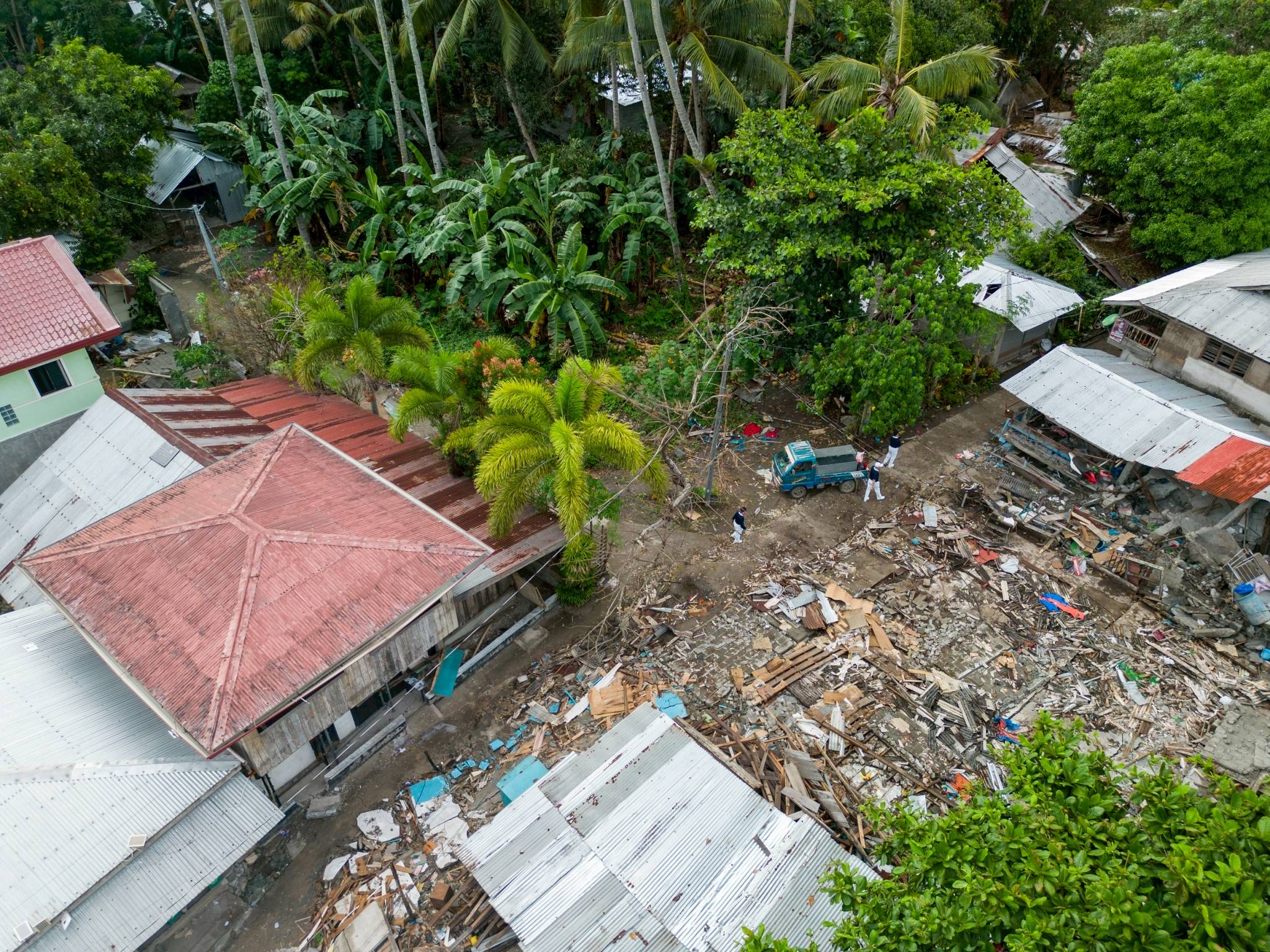 Homes appear to have been “erased” from where they once stood in this aerial view of a community in Jose Abad Santos, Davao Occidental, a week after the magnitude 7.8 quake struck on June 8.
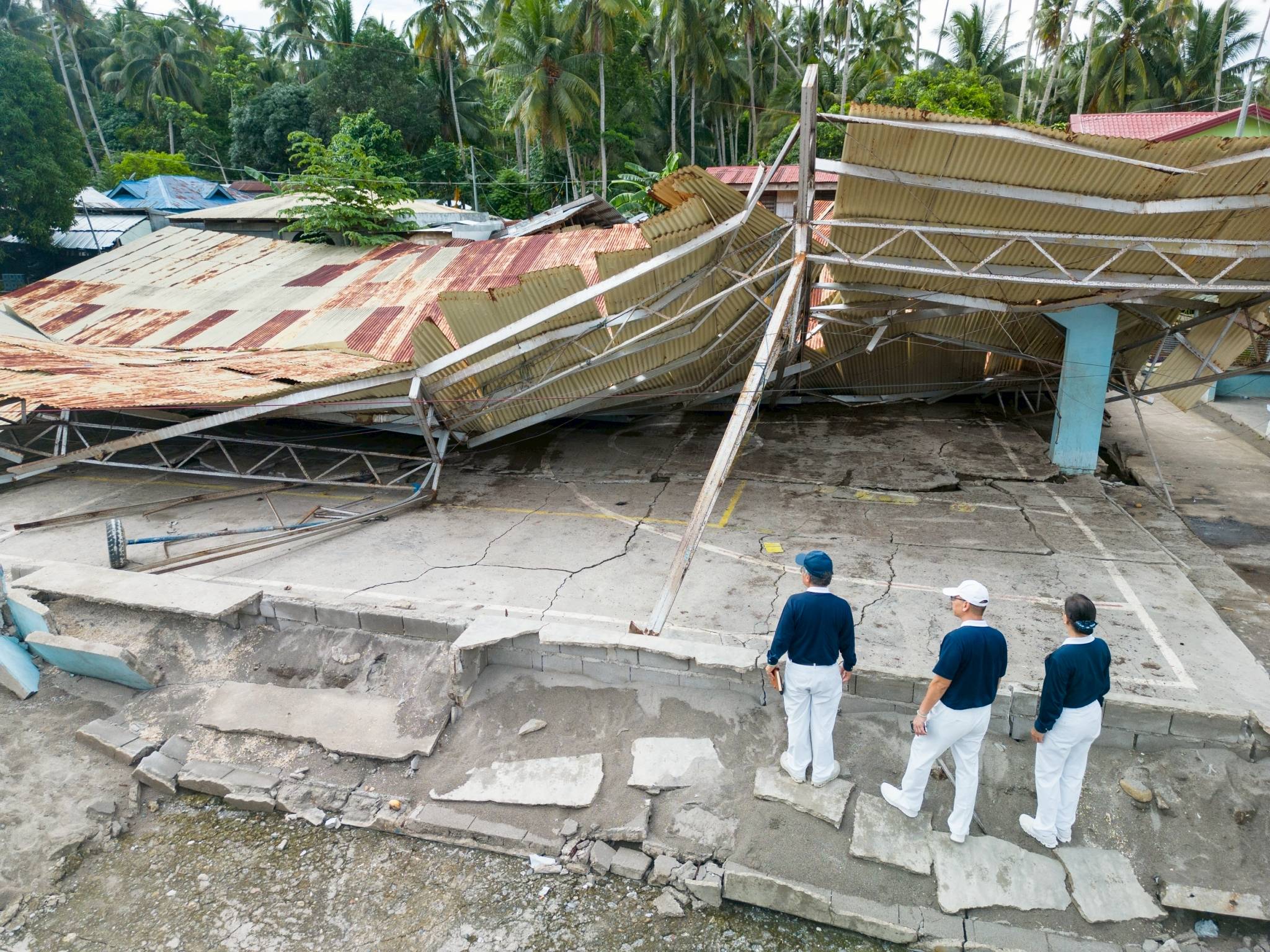 Tzu Chi volunteers can only stare at a covered court whose roof caved in from the powerful earthquake.
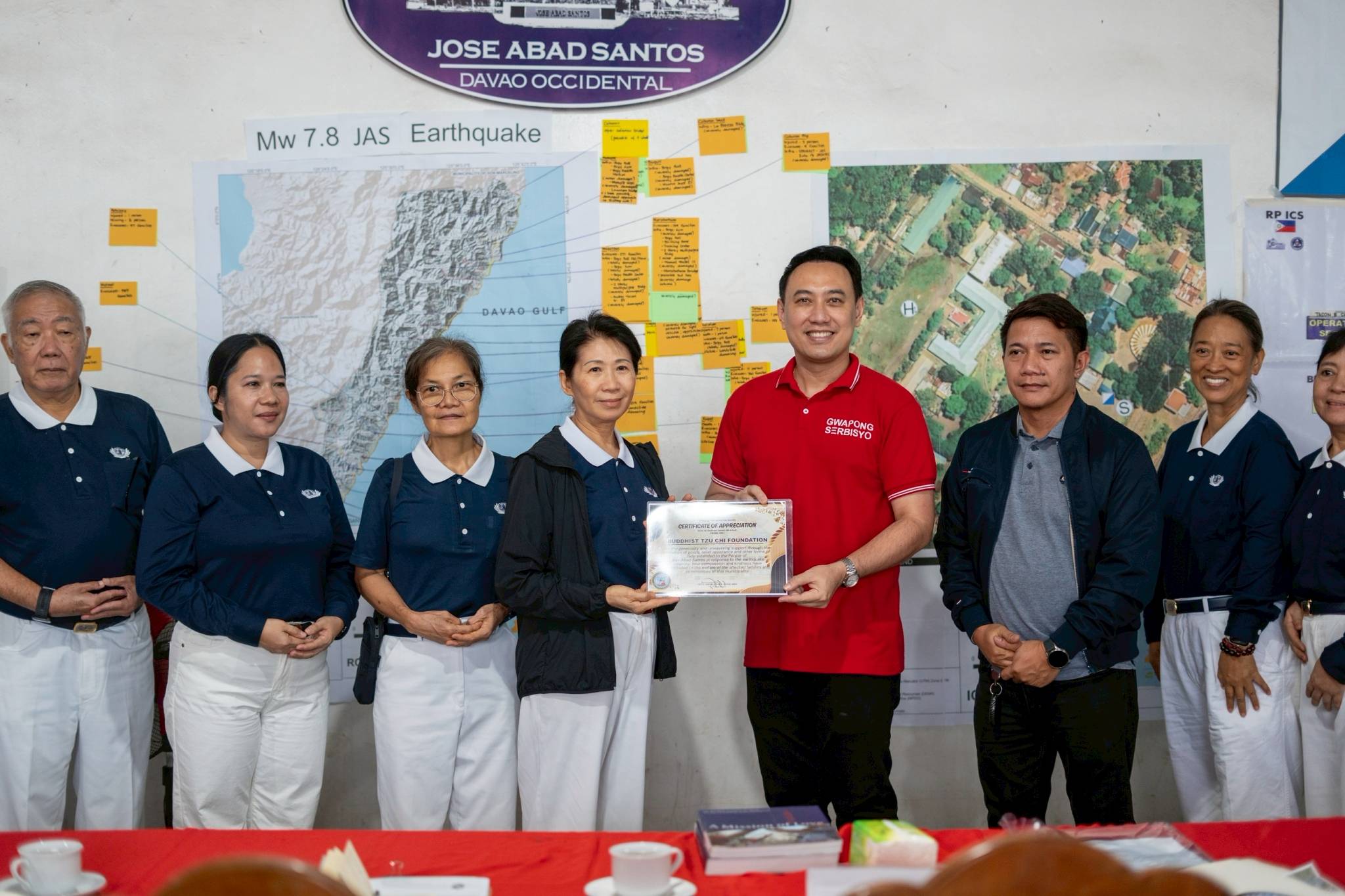 Jose Abad Santos Mayor Jason John A. Joyce (in red) presents Tzu Chi volunteers with a certificate of appreciation for traveling from Manila and Davao “to the to the farthest end of the Philippines to see our reality here.” Volunteers arrived with bread and emergency medicines and the promise to return with more aid for evacuees.
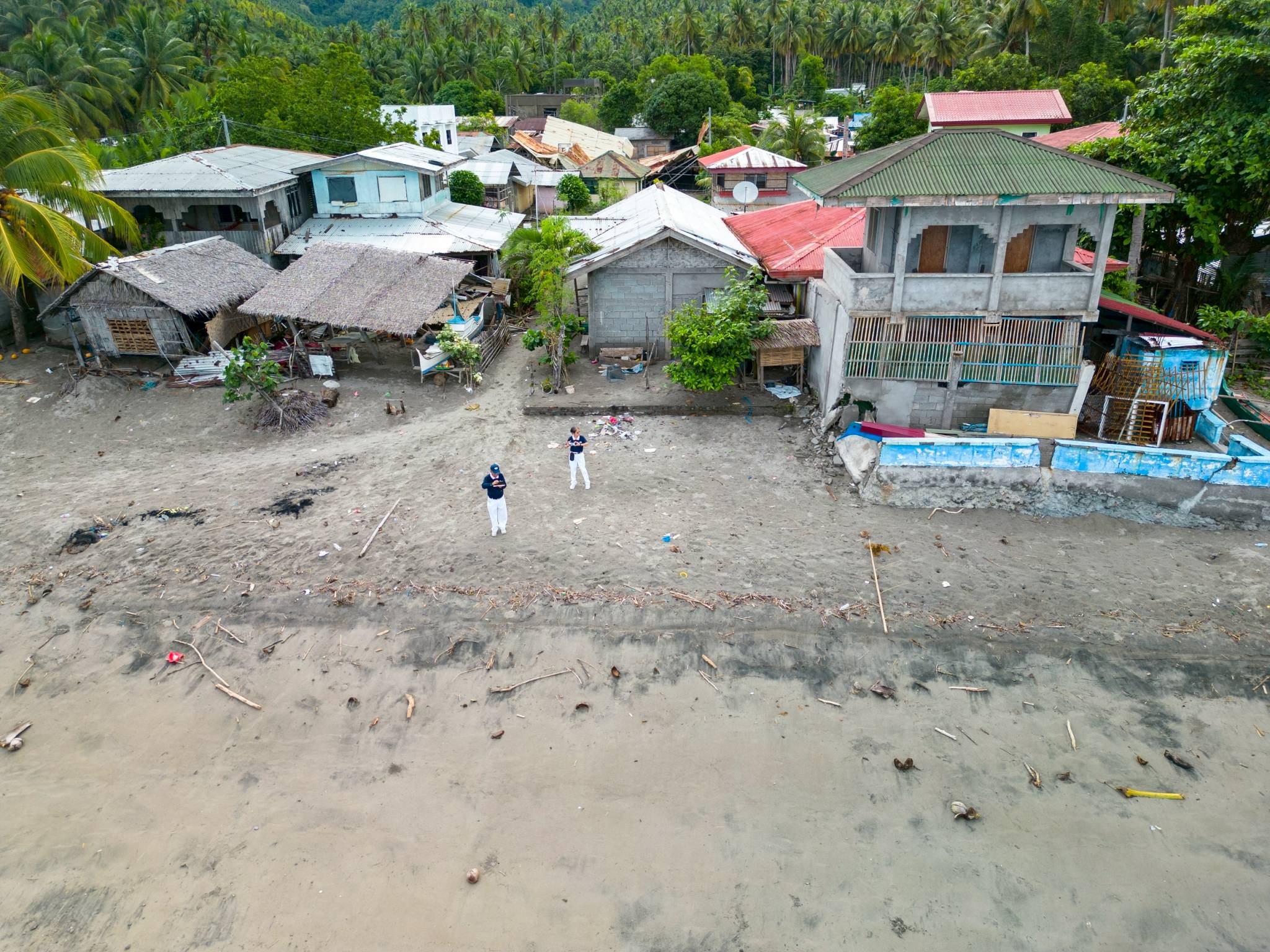 Tzu Chi volunteers stand by a shoreline whose waters have receded after the quake.
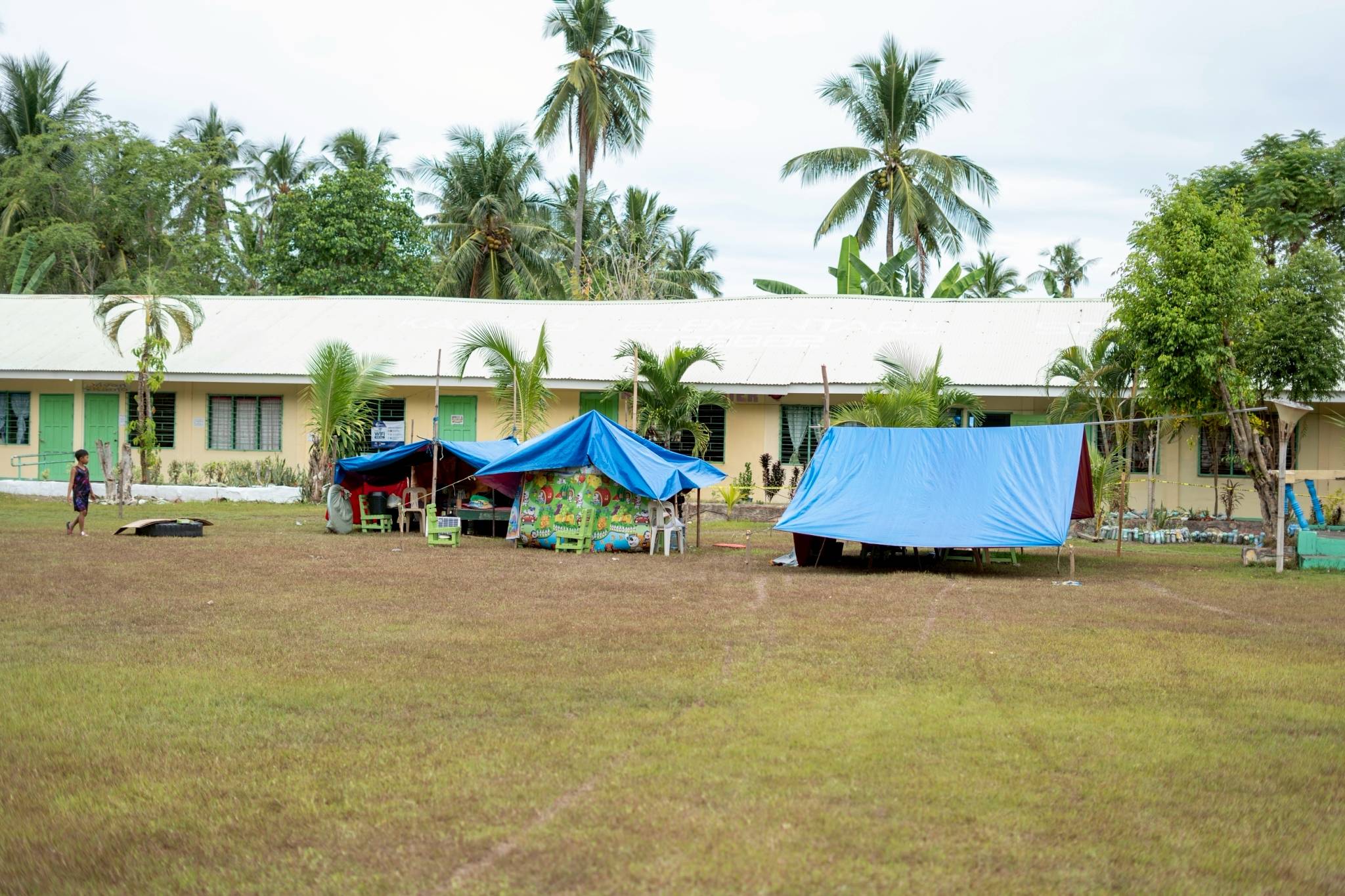 Tents serve as a temporary shelter for families who lost their homes. Yet when it rains, they still have to seek dry areas to sit and lay down.
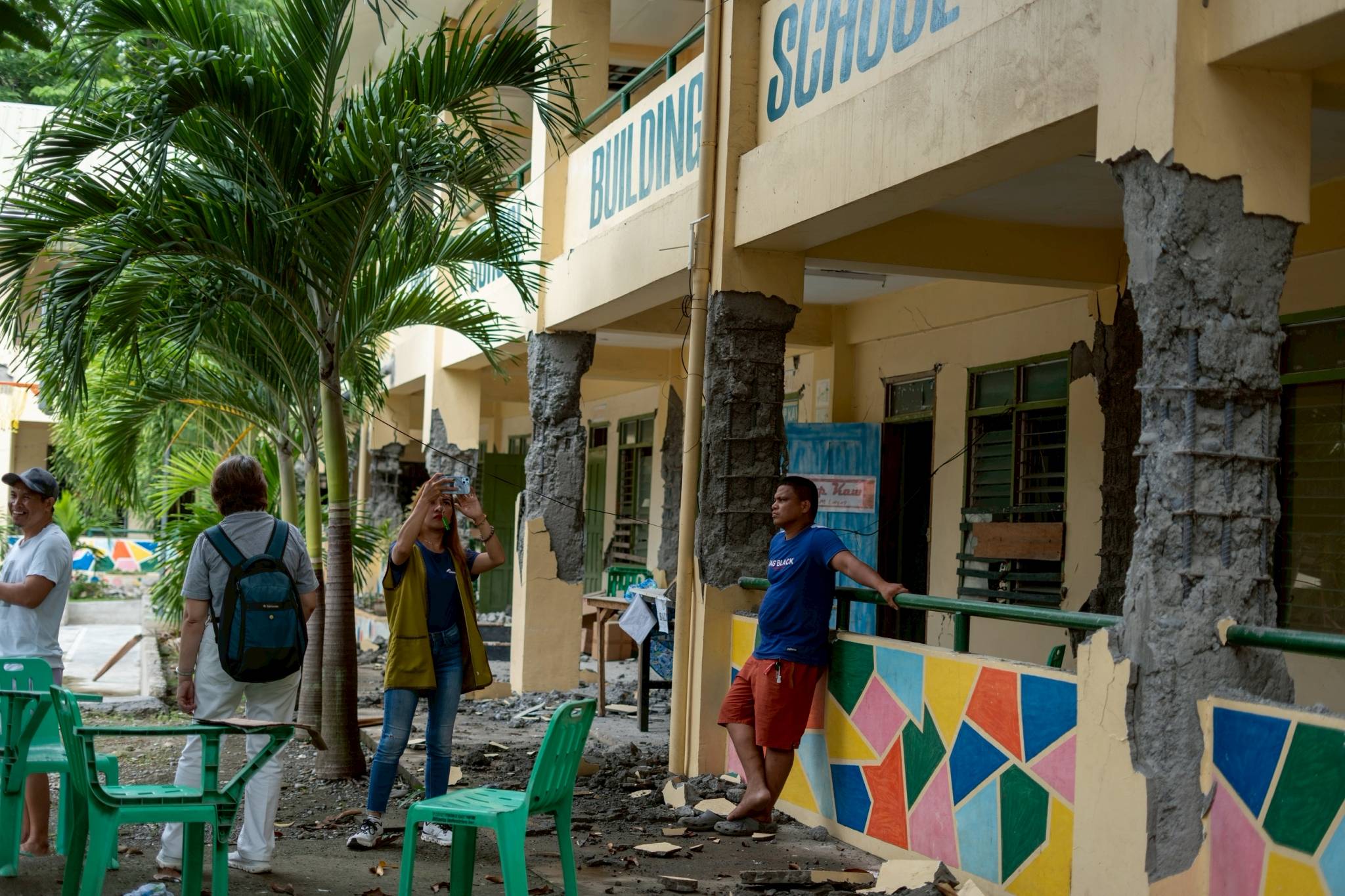 At Kalbay National High School, cement from this building’s posts were chipped away by the violent tremors.
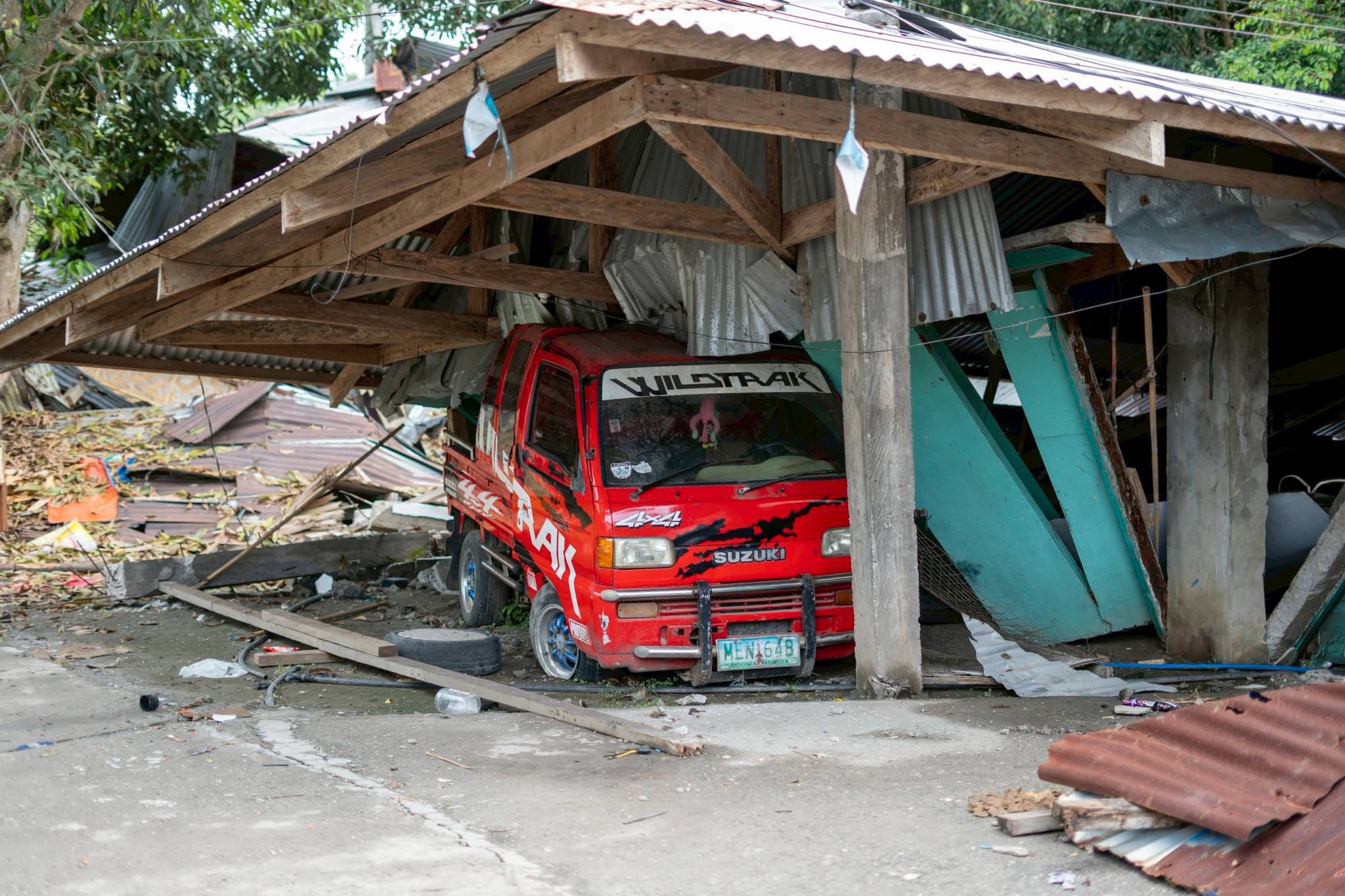 A pickup truck is crushed by the weight of a collapsed garage roof.
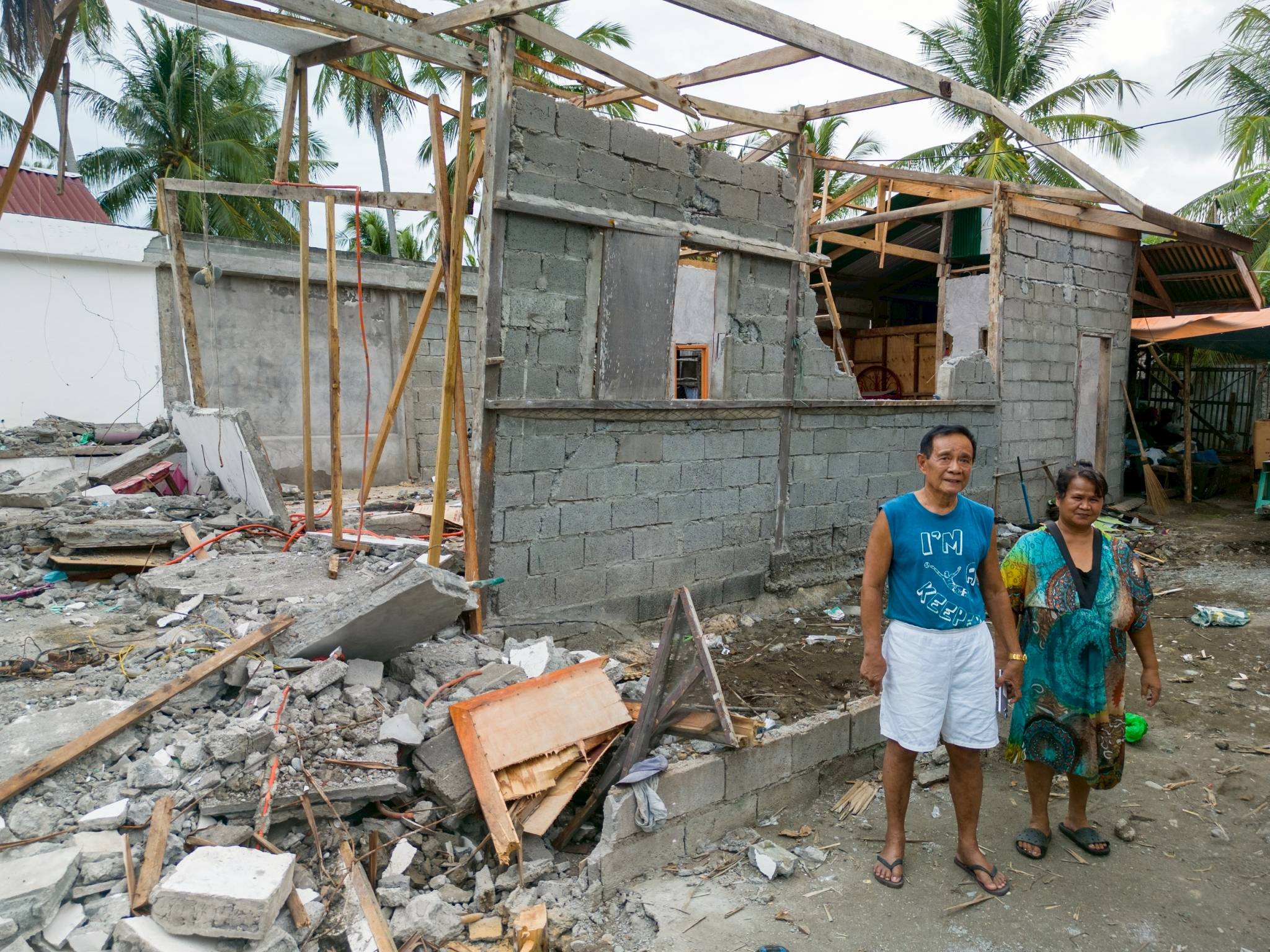 Rodrigo Masurin Moda Sr. and his wife Inriza stand before their damaged home in Barangay Kalbay.
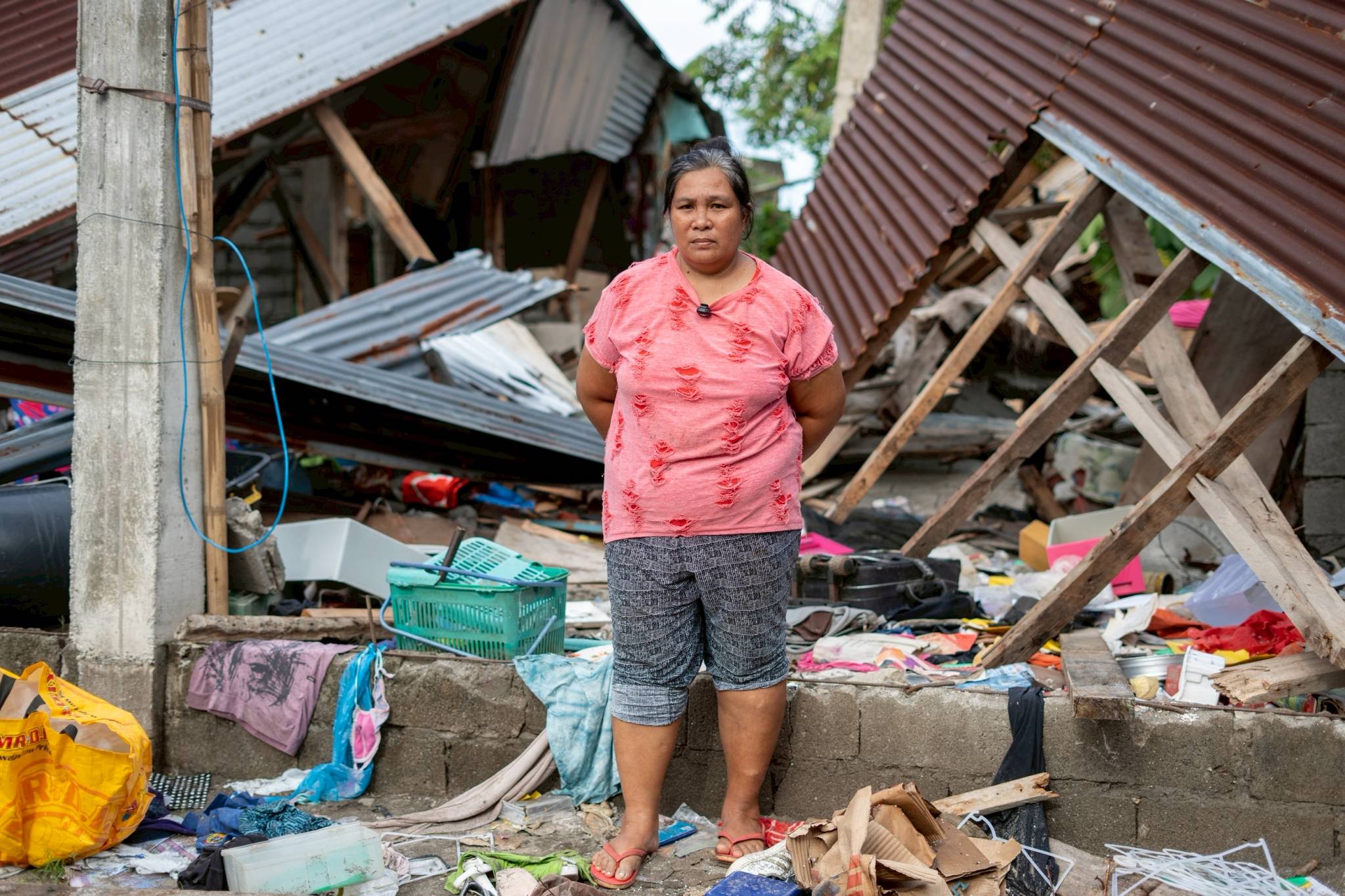 When Nesita Yato arrived home after the quake, all she could do was weep. Nothing that she and her fisherman husband had worked so hard to attain was retrievable.
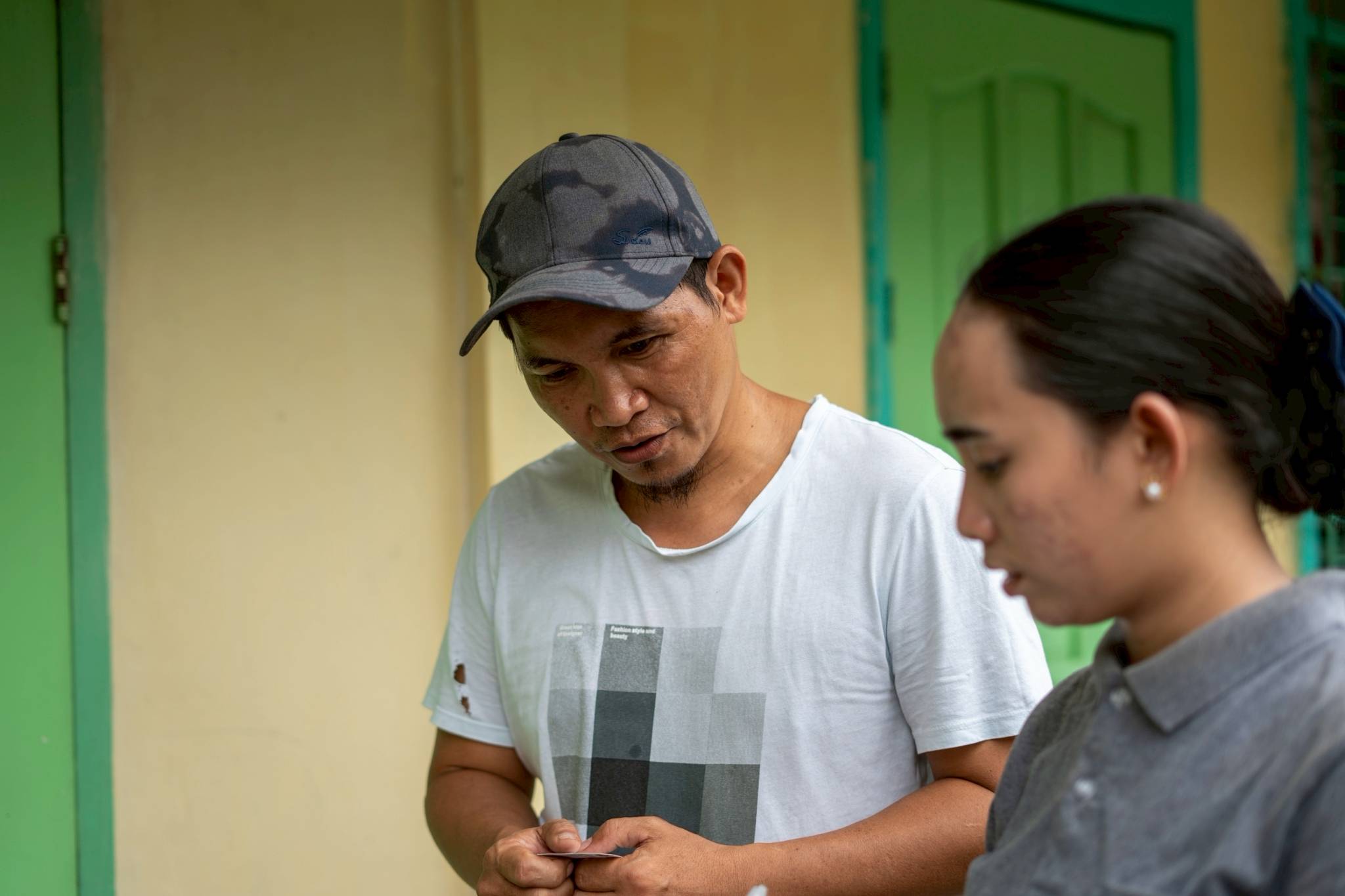 Kalbay National High School Grade 8 math teacher Reggie Laurence Danganin (left) was relieved that everybody was outside for the National Anthem when the quake occurred. “By the grace of God, we have no casualties,” he said.
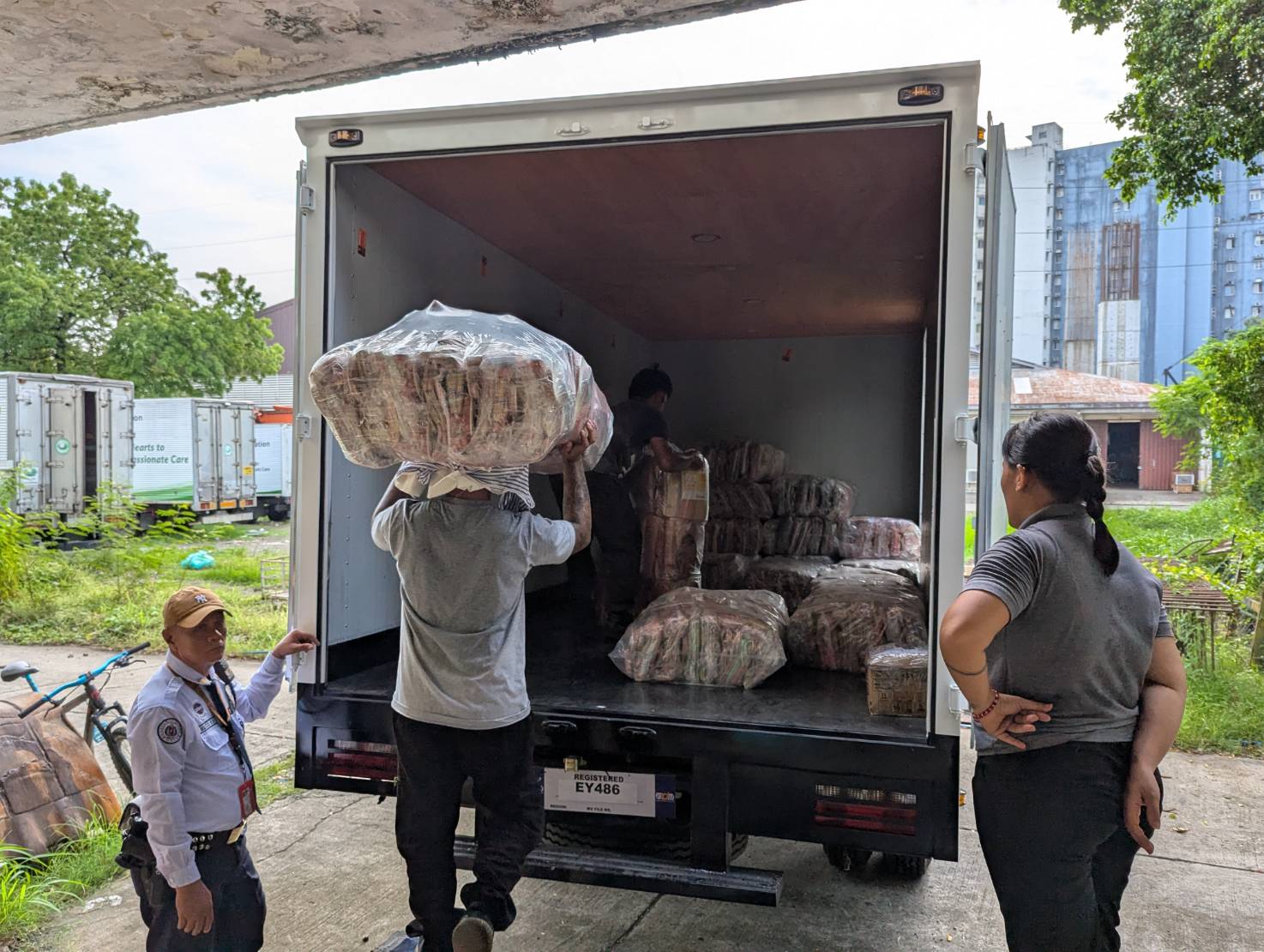 Tzu Chi staff commence the loading of 2,000 relief items, including sleeping mats, blankets, toothbrushes, and slippers, bound for Davao. The relief goods will be distributed to identified beneficiary families in the earthquake-affected areas of Jose Abad Santos and Glan as part of the foundation's ongoing disaster relief efforts.