
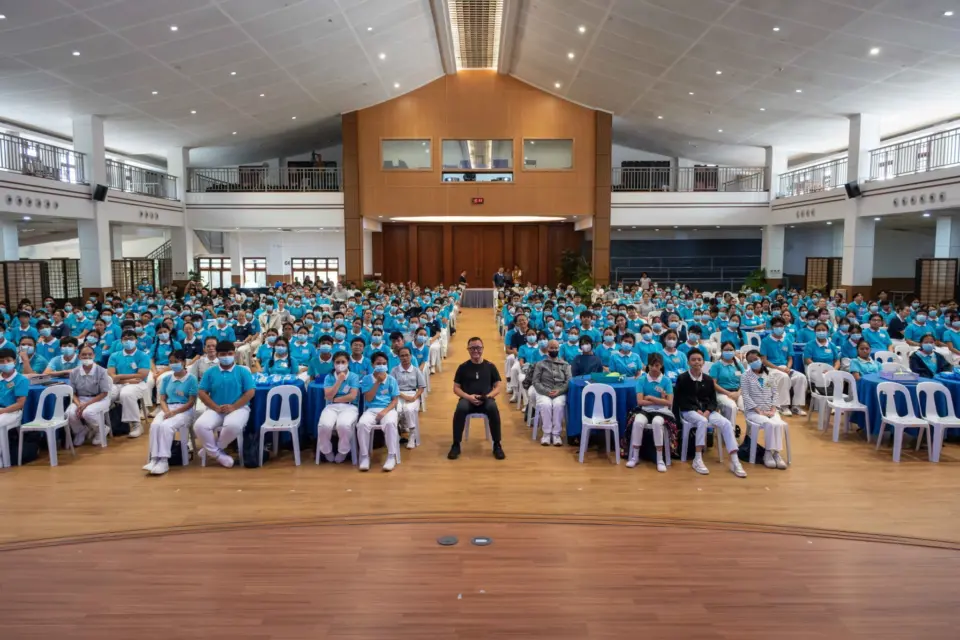
 From walking to eating and grooming, scholars learn Tzu Chi etiquette
553 scholars from Pampanga, Bicol, Palo, Iloilo, Davao, Zamboanga, and NCR attend the lecture-demonstration held at the third Humanities class
Through print, broadcast, the internet and live performance, Tzu Chi shares truthful, values-oriented stories that inspire love and compassion.
“To save the world, we must begin by transforming human hearts.”
Since it was first offered in 1995, a scholarship from Tzu Chi’s Educational Assistance Program has been credited for improving the lives of thousands of financially challenged youths. Through free quality education from Tzu Chi’s partner schools, colleges, and universities, scholars have gone on to earn degrees, land decent jobs with stable incomes, and enjoy the resources they worked so hard for to provide better lives for their families.
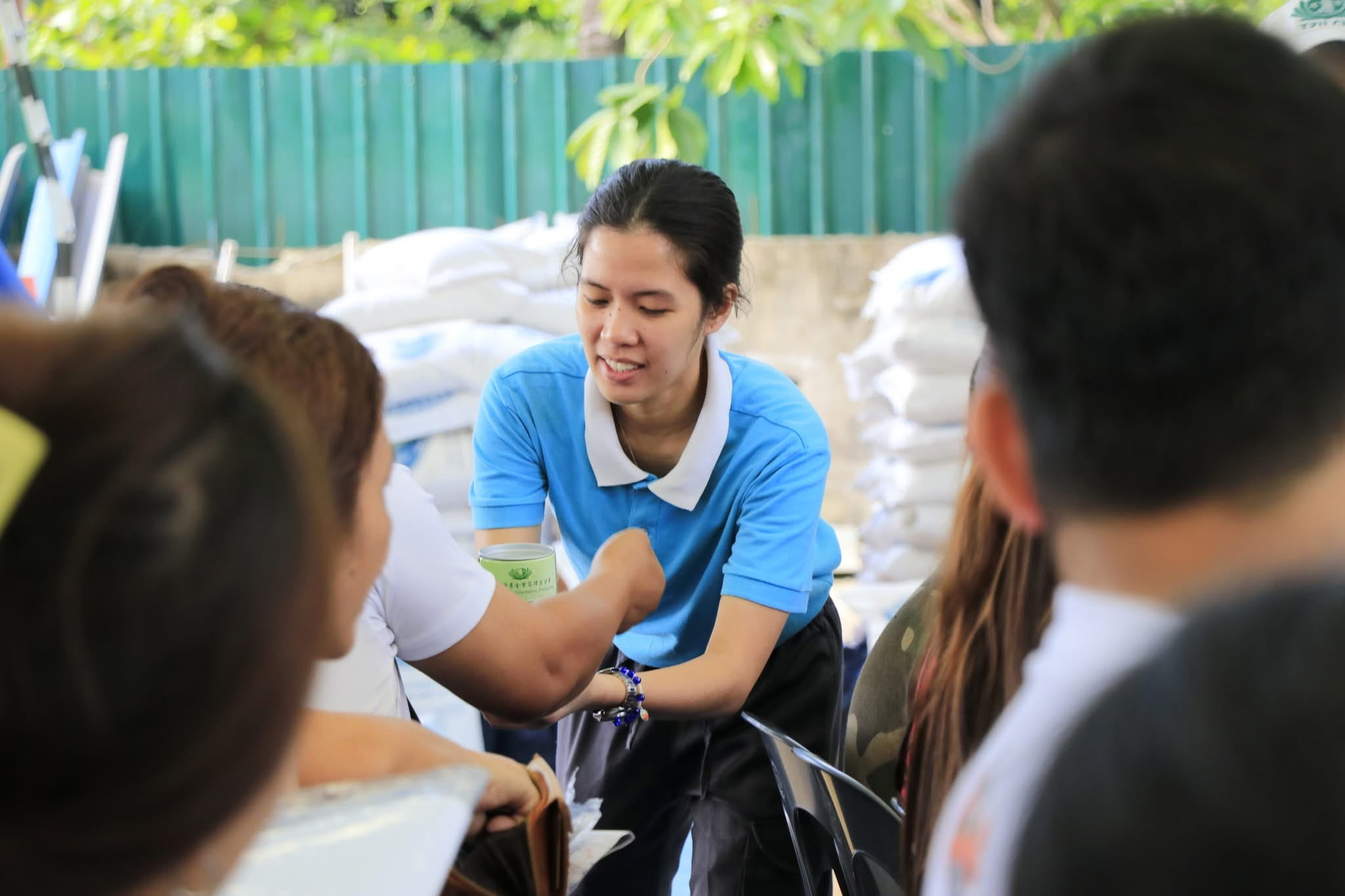
And then there are those like Tzu Chi Cebu scholar Gwen Nicole Loyao who are grateful for a different kind of learning that the scholarship affords, valuable lessons gained beyond books and the four corners of a classroom.
A consistent honor student in her grade school years at the Divine Angels Learning School in Cebu City, Loyao was thrown for a loop when her father suddenly lost his office job.
Unable to maintain the private school’s tuition, her mother transferred her to Samantabhadra Educational Institute on a Tzu Chi scholarship.
“Change for me was a bit hard,” she admitted. “I didn’t adapt easily.”
Sitting through monthly Humanities classes left her bored and impatient. “I asked a scholar, ‘What do you do? You just sit and listen to the teachings?’ She said, ‘Yes, but it’s much more than that.’”
With an open mind, Loyao gave the classes a chance. Eventually, she found herself applying the aphorisms of Tzu Chi founder Dharma Master Cheng Yen to her life.
“When I entered Tzu Chi, I didn’t see the big picture,” she said, her voice cracking. “There are people who are dying, who cannot read, who cannot even [write] their names.”
Once averse to attending Humanities classes, this scholar now makes time to impart stories about Tzu Chi, its founder, and her timeless, universal lessons to the next batch of scholars.
“Thank you for transforming not just me but all other students,” said an emotional Loyao.

The Tzu Chi Monthly Magazine, a bi-weekly newsletter, was published in 1967—a first step envisioned by Master Cheng Yen towards promoting a Buddhist culture. The radio program Tzu Chi World was aired for the first time in January 1985; the following year, the Center for Tzu Chi’s Mission of Culture in Taipei was opened and another magazine, the Tzu Chi Companion, launched. In January 1991, working with the Taiwan Government Information Office, Tzu Chi began a series of public lectures on “The Happy Life .” In 1995, Tzu Chi aired its first television program; by 1996, it had a website, and by 1998, its own TV station, Da Ai TV (for “great love”). The station aired short films and drama series highlighting values and good deeds, featuring characters worth emulating. Da Ai had two HD (high definition) channels in 2012, along with a worldwide channel and 12 satellites that broadcast new children’s programs and documentaries on health, science, the arts, the environment and more, commercial-free. Da Ai TV is available in the Philippines on cable TV.
The Tzu Chi Cultural Publishing Company, which would print Master Cheng Yen’s teachings and other important materials for greater access, was established in 1990, delivering materials to bookstores and other mainstream outlets, instead of relying on volunteers to distribute them by hand. Later, Jing Si (“still thoughts”) Publications would make more printed material available through Tzu Chi’s very own bookstore, Jing Si Books and Café, which had 84 branches worldwide by 2016. Its hands-down bestseller: The Jing Si Aphorisms, the compiled talks and sayings of the eloquent Master Cheng Yen, which have inspired and guided many. Some four million copies have been printed worldwide, in 18 languages, and the volumes can be found in schools, stores, prisons, government offices, and public and private libraries all over the world.
The center of culture in Taipei is today the headquarters of Da Ai TV, e-radio, the Tzu Chi Monthly Magazine as well as its digital arm, the Chinese monthly magazine Rhythms (first published in 1998), English and Japanese periodicals, and Jing Si Publications. It is through these channels that the organization’s message of love and compassion is spread to every corner of the world.
From walking to eating and grooming, scholars learn Tzu Chi etiquette553 scholars from Pampanga, Bicol, Palo, Iloilo, Davao, Zamboanga, and NCR attend the lecture-demonstration held at the third Humanities class
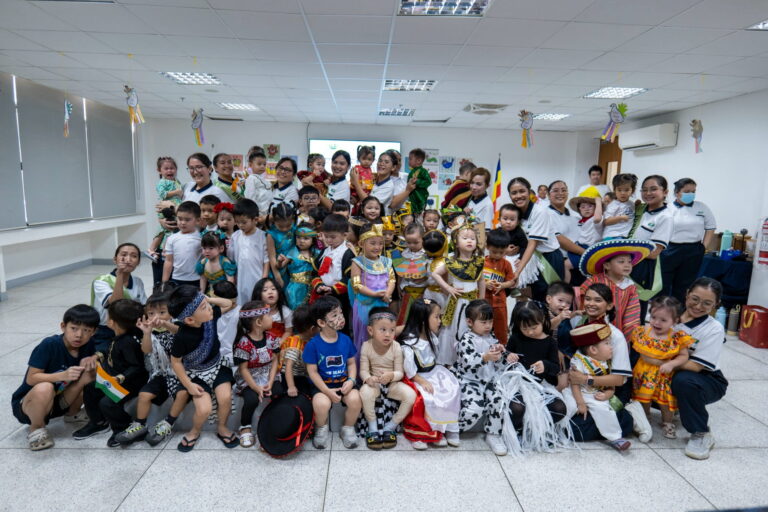 Tzu Chi Great Love Preschool Philippines celebrates United Nations Day
The learners of Tzu Chi Great Love Preschool Philippines pose together in their vibrant cultural costumes.
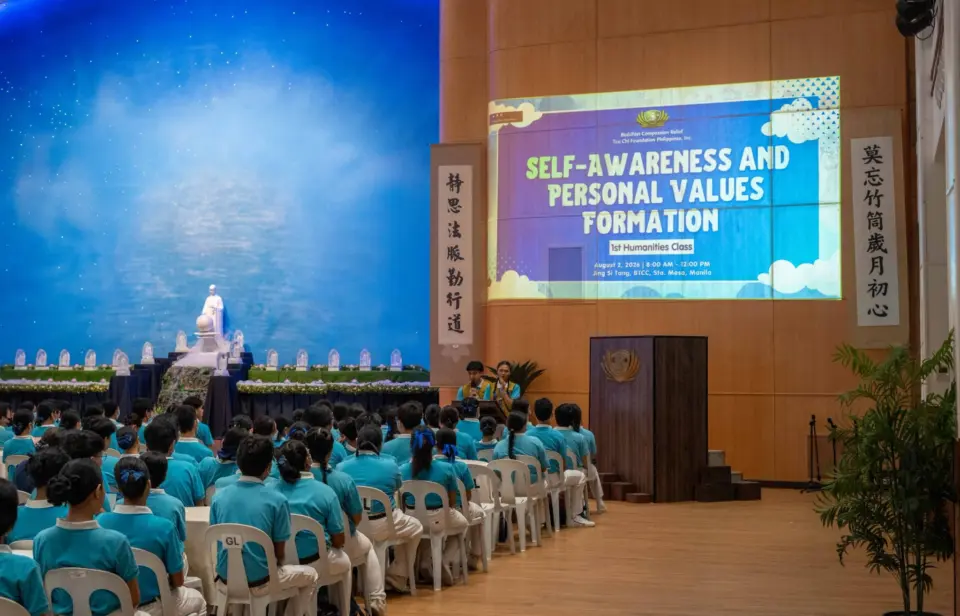 Self-awareness, values formation at first Humanities class
The important discussion saw the participation of 362 scholars from seven Tzu Chi chapters
Give online by card, QR Ph, Maya or Google Pay, or send through GCash, a bank or Globe Rewards points.
Ways to giveHelp at relief distributions, free clinics and recycling, near where you live. There is no minimum commitment.
Become a volunteerScholarships for college students, and free care at the clinic in Sta. Mesa. See who can apply.
See the programs CharityThe first mission
 MedicineFree clinics and TIMA
 EducationGreat Love Preschool
 Humanistic cultureMedia with values
 Bone marrow donationSince 1993
 Community volunteerismOrganised by neighbourhood
 Environmental protectionRecycling and eco living
 International reliefFive principles