
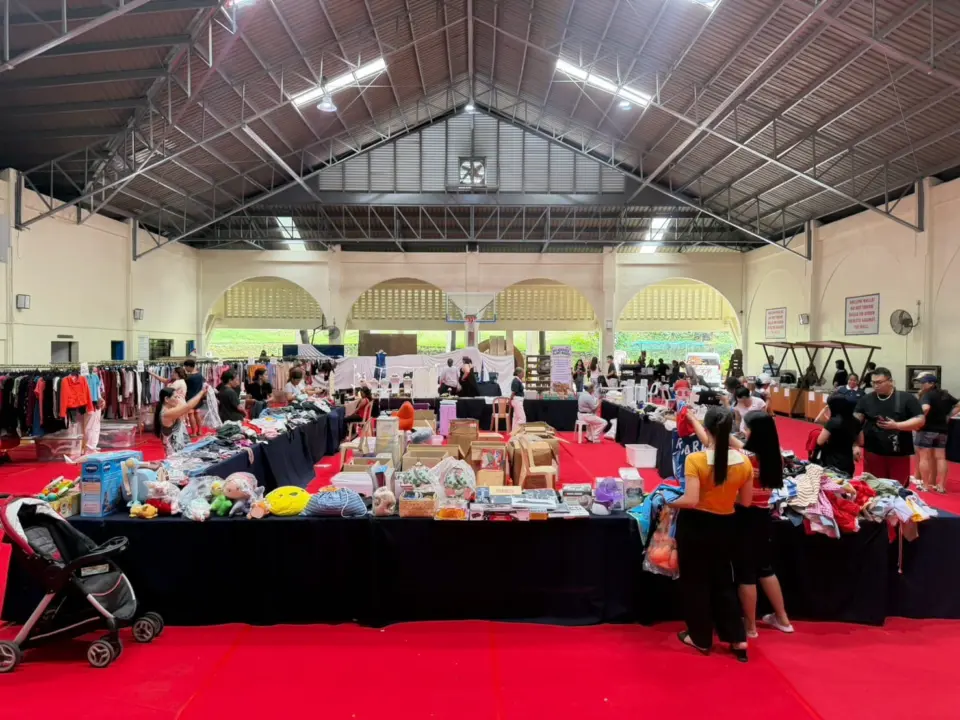
 Tzu Chi holds charity bazaar for earthquake-hit schools in Sarangani
After 10 years, Tzu Chi brings the bazaar back to Ayala Heights Village, Quezon City.
Volunteers promote recycling, conserve resources and help their communities adopt eco-friendly habits.

“As long as everyone adjusts living habits and behavior, we can mitigate natural disasters.”
In its three years as advocacy partner of Runrio’s Earth Day Run, the Tzu Chi Foundation has introduced thousands of runners to practical, easy, and sustainable ways to protect the Earth and its natural resources.
In the past, volunteers have sold plant-based sandwiches and snacks, durable floor mats woven from the excess material of sports socks, and all-purpose cleaners made with fermented fruit and vegetable peels. Through its Charity Run for Education, it debuted Earth-friendly innovations like the reusable collapsible hydration cup and race shirts using material processed from single-use PET bottles.
More importantly, the tireless efforts of volunteers constantly clearing the grounds of trash and segregating them in marked bins has made runners conscious about keeping the post-race area clean and litter-free.
For Tzu Chi Deputy CEO Woon Ng, raising awareness about the need to take better care of our environment is critical.
Thus, simply knowing that nature needs protecting is not enough. “We encourage people to do it. It has to be Do-It-Yourself. It has to be hands-on,” says Ng. “We’re trying to pave the way for the next generation. This is for their future.”
The game is a nod to TCY’s upcoming mangrove-planting project. “Mangroves are warriors of our coastal lines,” explains TCY volunteer Alex Wu. “Mangroves live between the ocean and the land, and when they are planted, their roots attach to the soil to make them stable.” With this stability, dense mangroves act as a natural buffer against destructive storm surges.
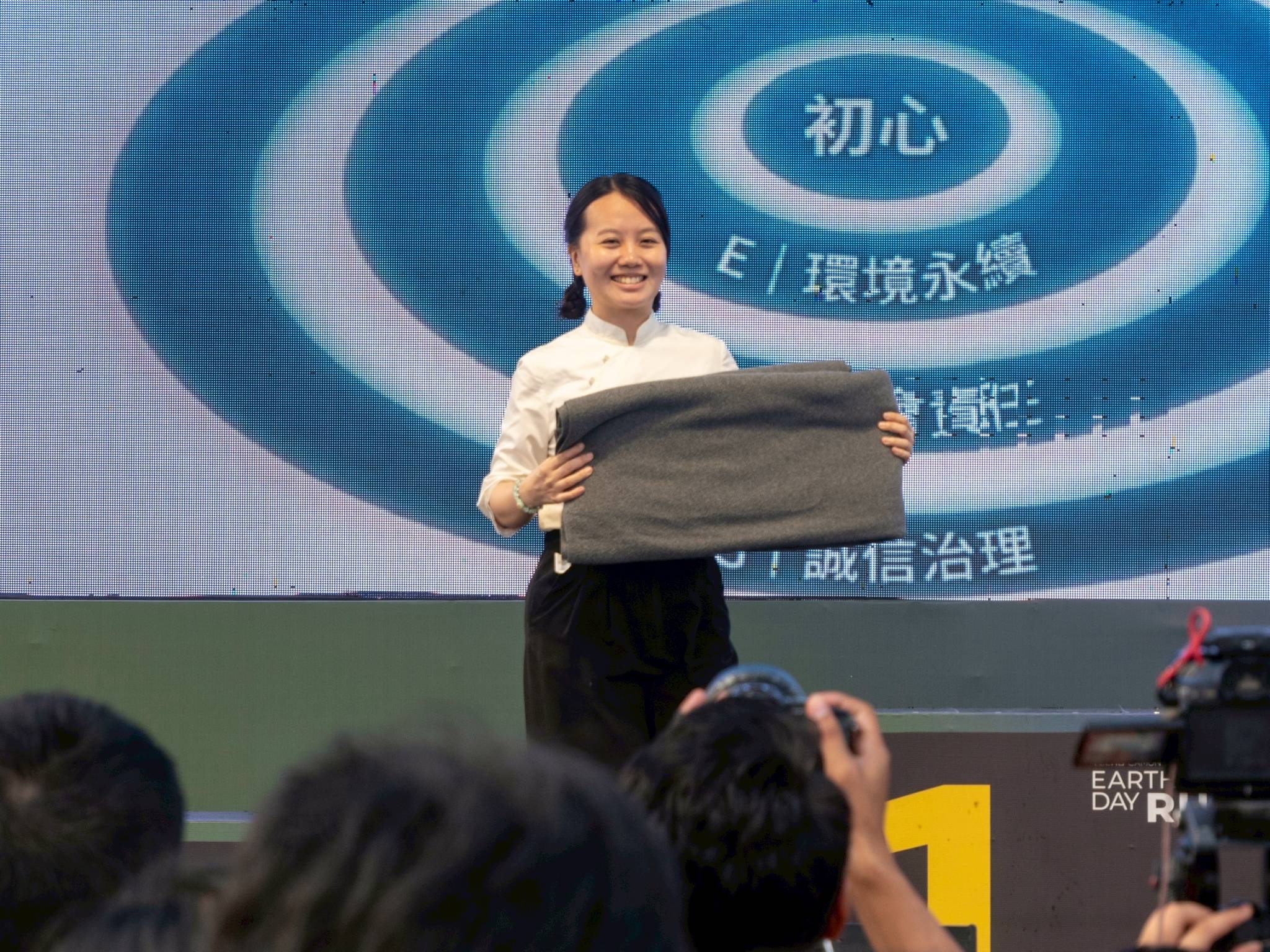
Later, before thousands of finishers of the 1KM, 5KM, 10KM, and 21KM race categories, TCY volunteers walked the stage sporting high-quality clothing and accessories by DA.AI Technology, global pioneers of recycled-to-recycled products. The social enterprise arm of Tzu Chi creates various products—hats, bags, sunglasses, blankets, even Tzu Chi volunteers’ uniforms—using fabric and materials upcycled from PET bottles.

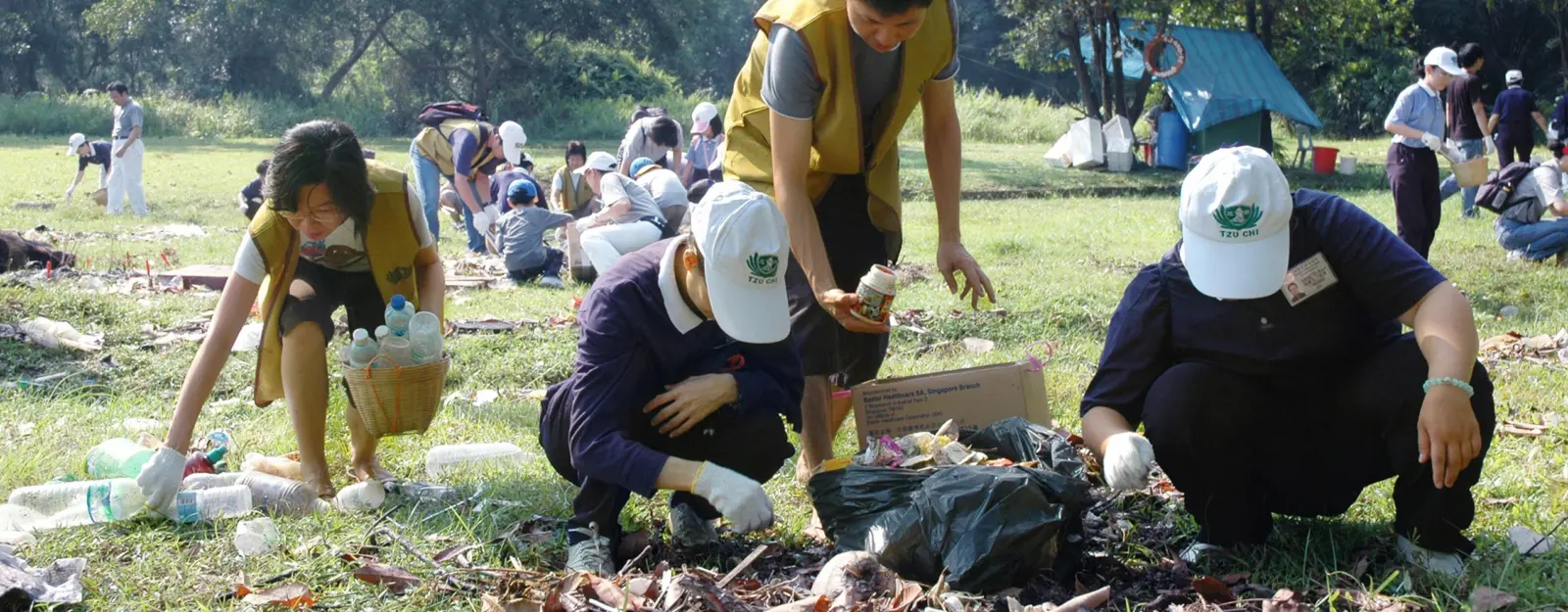 Recycling CenterRecycling education stations, where volunteers of every age give themselves selflessly, no matter how tedious the work.
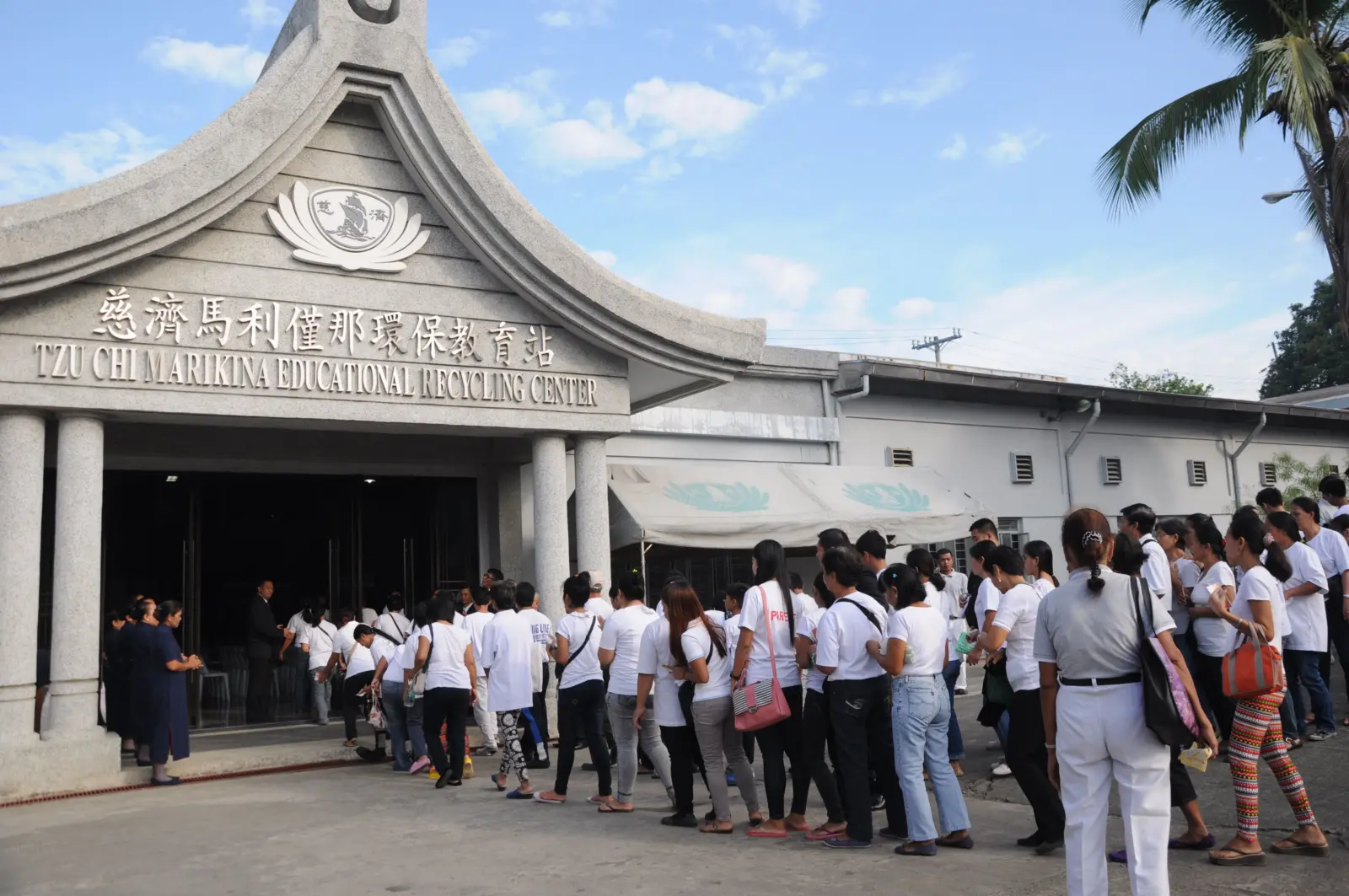 Recycling Donation DriveRecyclable materials you no longer need, donated to Tzu Chi to be reused.
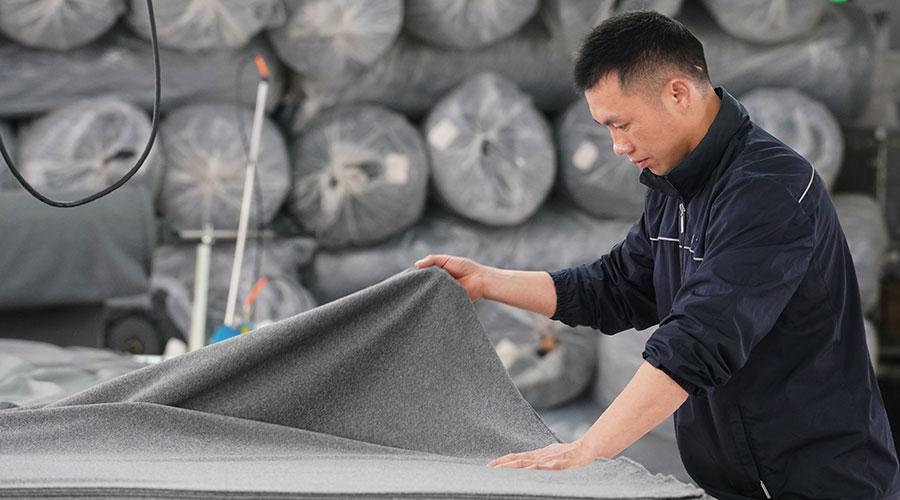 DA.AI TechnologyClothing, bedding and other everyday textiles made from recycled PET bottles.
Seeing uncollected garbage rotting in the streets during a garbage collectors’ work stoppage, Master Cheng Yen calls on the public to “do recycling with your clapping hands.”
Tzu Chi Philippines invites the public to donate recyclable materials to the Buddhist Tzu Chi Campus, to be reused.
Tzu Chi becomes the advocacy partner of Runrio’s Earth Day Run, and gives 20 kilograms of plastic bottle caps and rings to DOST-PNRI’s research on reclaiming used water.
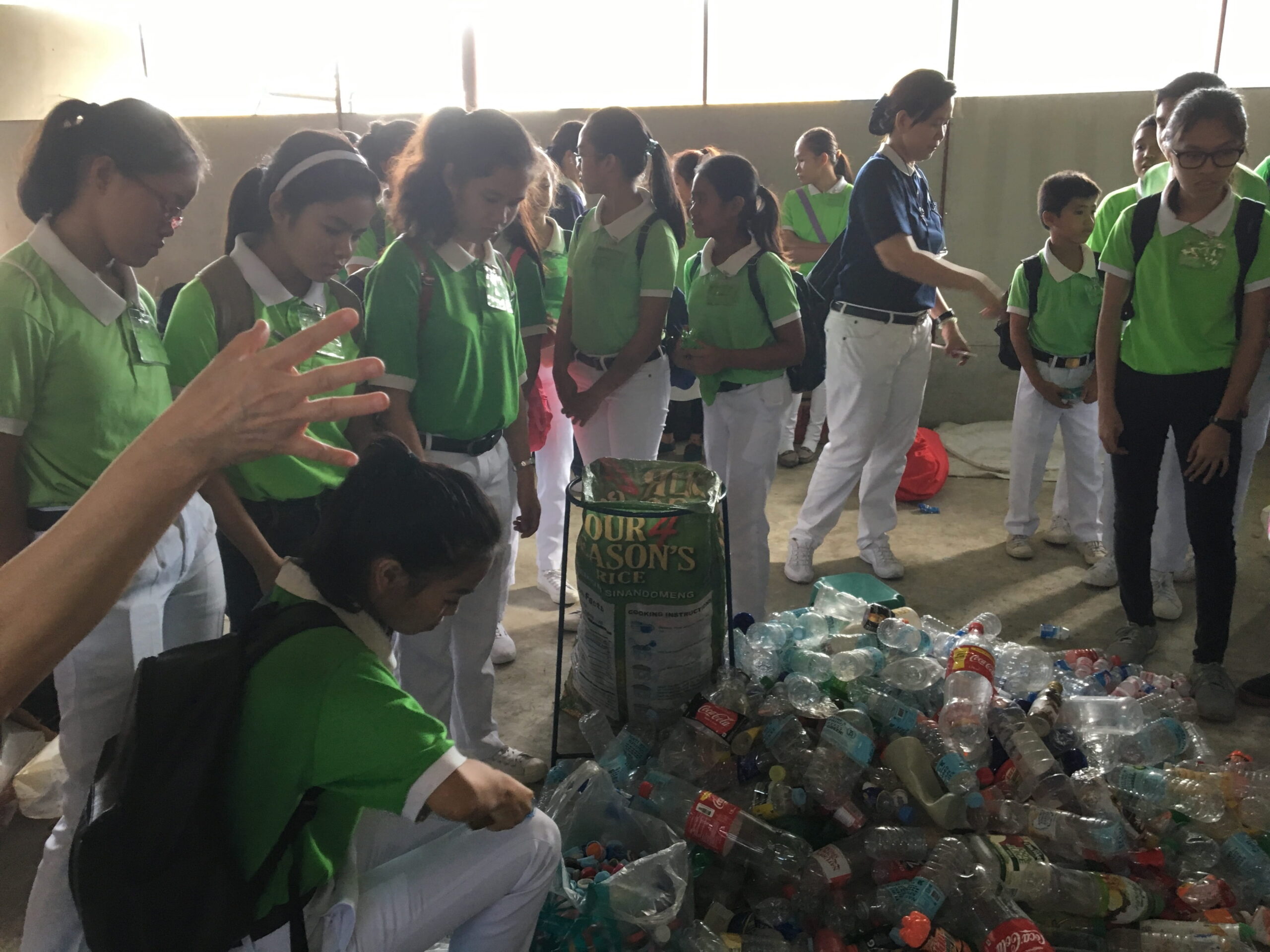
Human activities are taking an increasing toll on our planet. As Master Cheng Yen says, “Natural disasters arise from man-made destruction of natural resources. Human beings, in order to enjoy, greedily destroy earth resources…Facing so many disasters, we should inspire kindness, compassion, love, and benevolence. As long as everyone adjusts living habits and behavior, we can mitigate natural disasters.”
Tzu Chi volunteers worldwide actively promote recycling to the public, and set examples for others by taking action to conserve resources and reduce carbon footprint. They also encourage and guide the residents in their community to carry out eco-friendly habits and practices in their daily lives to protect the environment. Environmental volunteers come from all walks of life—students, businessmen, government leaders, the elderly, even the partially disabled. By 2016, Tzu Chi counted some 105,457 recycling volunteers, 548 recycling stations and 10,204 recycling points in 16 countries, which host government workers, offices, and even school field trips to educate people on recycling.
In addition, Tzu Chi actively advocates a meat-free diet and promotes a simpler and more sustainable way of living, which can help mitigate global warming.
Tzu Chi holds charity bazaar for earthquake-hit schools in SaranganiAfter 10 years, Tzu Chi brings the bazaar back to Ayala Heights Village, Quezon City.
 Tzu Chi brings Plant-based Food to Universities
Students and faculty at the Philippine Normal University (PNU) showed their support for the plant-based movement by adopting Veg-Up!, a project by the Tzu Chi Foundation that advocates for a plant-based lifestyle. In July, PNU successfully transformed its canteen menu, shifting to 40 percent plant-based dishes. Two months later, it opened its campus to a whole-day Veg-Up! caravan, featuring simultaneous screenings of environmental documentaries, the playing of trivia games, and the selling of plant-based tocino sandwiches, plant-based snacks, and starter kits of textured vegetable protein. “What we want is to sustain this project, so that even without us, they can do it on their own,” said Tzu Chi Program Officer Lineth Brondial. “We are also bringing Veg-Up! to other schools so the project doesn’t stop at PNU.”
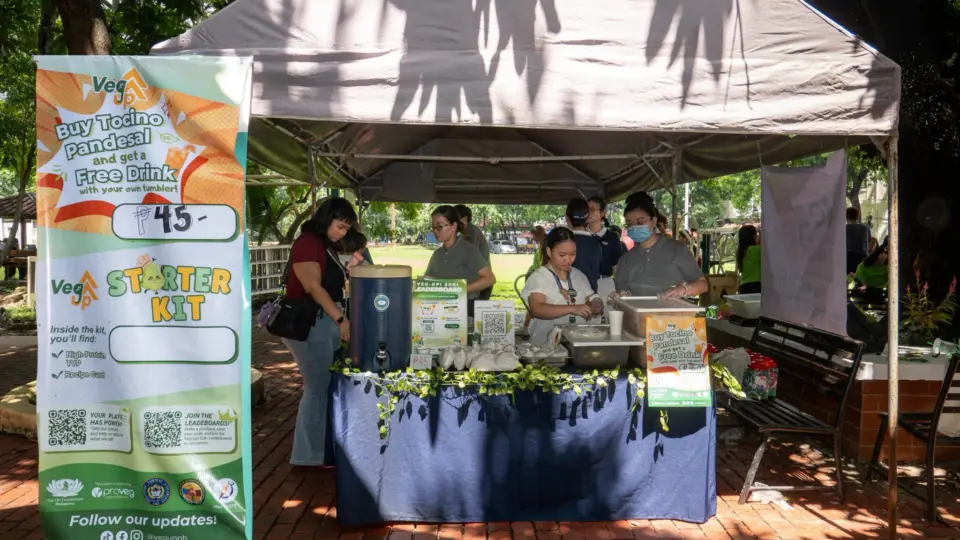 Tzu Chi holds Veg-Up! caravan in PNU
It was a whole day of games, documentary screenings, and plant-based tocino for students of the Philippine Normal University.
Give through GCash, Maya, Metrobank, BDO or Globe Rewards points.
Ways to giveHelp at relief distributions, free clinics and recycling, near where you live. There is no minimum commitment.
Become a volunteerScholarships for college students, and free care at the clinic in Sta. Mesa. See who can apply.
See the programs CharityThe first mission
 MedicineFree clinics and TIMA
 EducationGreat Love Preschool
 Humanistic cultureMedia with values
 Bone marrow donationSince 1993
 Community volunteerismOrganised by neighbourhood
 Environmental protectionRecycling and eco living
 International reliefFive principles