
Tzu Chi’s welding course receives TESDA certification
The milestone means the course meets world standards
By Joy Rojas
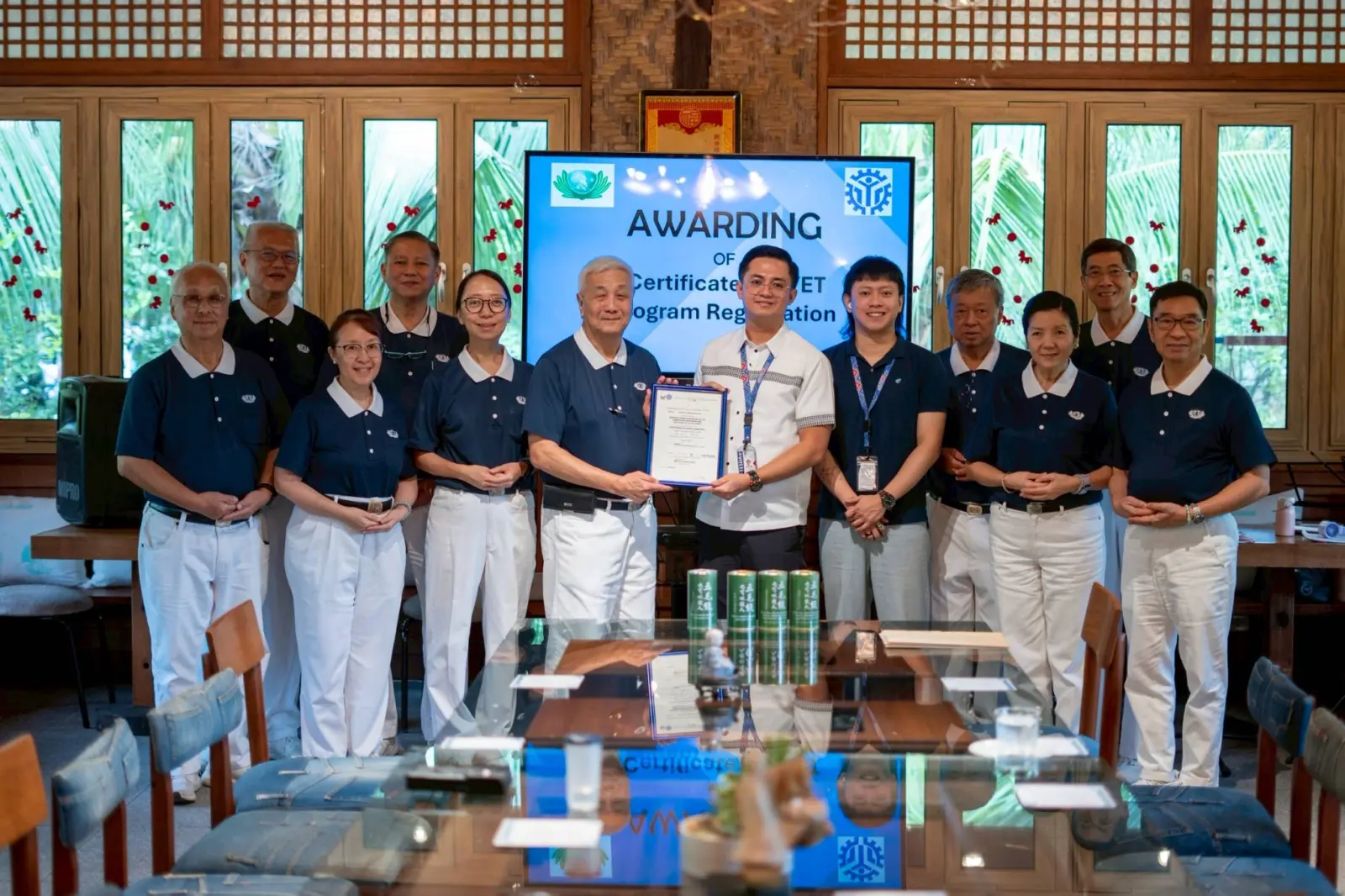
Representatives from the Technical Education and Skills Development Authority (TESDA) were at the Buddhist Tzu Chi Campus in Sta. Mesa, Manila, on May 19 to present a Certificate of TVET Program Registration for the course on Welding Carbon Steel Plates & Pipes Using Shielded Metal Arc Welding (SMAW) offered by the foundation’s Technical-Vocational Training and Livelihood Program.
Tzu Chi Philippines CEO Henry Yuñez received the certificate from Paul John Ramos, director of TESDA’s Manila District. Also at the gathering were Unified TVET Program Registration and Accreditation System (UTPRAS) Focal Person Rene Boy Escuban and Tzu Chi volunteers.
The certification is a milestone for the Tech-Voc program, which began as a livelihood program in 2010. As of December 2025, it has awarded 1,120 scholarships on short, skills-based courses to underprivileged students, 95 percent of whom have earned their National Certificate II (NC II). The NC II is a TESDA-issued certificate that serves as a graduate’s proof of competency and ability to perform the basic skills of their course.
“Today was a very significant day for Tzu Chi Philippines because we have finally received our official registration as a TESDA training center,” says Tzu Chi Head of Technical-Vocational Programs Dolly Alegado Cruz. “This means our Tzu Chi course curriculum on Welding Carbon Steel Plates & Pipes Using Shielded Metal Arc Welding has passed world standards.
“As a registered training center, we can also access available funding from local agencies. It also gives us a brand of recognition, so we can approach partner companies to fund the other programs that we have.”
For Tzu Chi’s welding scholars, the TESDA-certified course gives them an edge over other applicants seeking employment both here and abroad.
Director Ramos, who was given a tour of the Tzu Chi campus, described its technical-vocational facilities as aligned with industry requirements. He was also impressed by how Tzu Chi trainers emphasize values-centered education as much as skills. Like scholars under Tzu Chi’s Educational Assistance Program, Tech-Voc scholars attend Humanity classes, where they learn about helping without expectation, filial piety, caring for nature, and other teachings advocated by Tzu Chi founder Dharma Master Cheng Yen.
“When it comes to industries, their usual concern is [work] attitude,” he says. “A big part of Tzu Chi Foundation is developing the humanitarian side of each scholar, not just to focusing on skills development.”
Ramos looks forward to more opportunities to collaborate with the foundation and its programs. “To strengthen the offerings of your technical-vocational education and provide more accessible trainings,” he says. “I saw earlier that your scholars come from different provinces. We will be able to help more.”
Adds Cruz, “As our CEO Henry Yuñez says, ‘This is a mission of love.’ One of the reasons why we would want to ensure and continue our partnership with TESDA is that we share the same advocacy: to reach as many individuals and families who are in need.”


