


February 27, 2026
Keeping the art of beautiful writing alive
By Joy Rojas
At Tzu Chi Foundation, no Year End Blessing is complete without the participation of calligraphers filling scrolls of red paper with auspicious themes handwritten in graceful Chinese characters. Hung on the doors and screens of homes, the scrolls and their uplifting messages invite peace and prosperity while protecting residents and their guests from evil.
Among the calligraphers at Tzu Chi’s Year End Blessing on February 22 at the Jing Si Hall was Alfonso Co Ong. Sporting his trademark black visor with a tuft of salt-and-pepper hair, he used brushes and ink to fill one scroll after another with affirmations of good health, abundant fortune, and a virtuous heart and conduct. Visually, they are “beautiful writing,” words used to explain the meaning of calligraphy.
Ong’s penmanship wasn’t always this way. As a child, he regarded his writing as “ordinary.” But his elementary school teacher thought otherwise and encouraged him with lessons.
Although he found it difficult at first, he kept at it, and slowly developed not just an interest in calligraphy but his own style. Trips to China and Taiwan exposed him to paintings executed with such artistry and finesse, so unlike the stiff characters he was used to seeing. “When I returned home, I tried to write what I saw,” he said. “I was more patient and my writing got better.”
People certainly took notice. Years ago, he joined a calligraphy contest and his submission landed him second place. As crowds milled around the display of entries, he overheard a guest pointing to his work and saying it should have placed first. “I was happy, of course,” he said.
Now 82, Ong was in his 70s when he got a call from the bank that received a check he had issued.
“Who wrote this check?” asked the bank personnel.
“I did,” he answered and chuckled. “They thought it was written by a woman.”
Despite the clamor for Chinese calligraphy during special occasions like the Lunar New Year, Ong notes the public’s waning enthusiasm for the art. “Calligraphy is hard. Studying it is hard,” he said. “That’s why young people don’t want to learn it. They don’t have the patience.”
Still, events like Tzu Chi’s Year End Blessing, which creates opportunities for everyone to try it out, could spark renewed interest. As calligraphers skillfully wielded their brushes during the program, volunteers set up an area where kids could try their hand at it.
Ong has found a willing student. “When my granddaughter saw my calligraphy, she asked me to write for her the letters from A to Z,” he said. “So, I did, and when she got home from school, she started practicing. Now she’s good.”
Once reluctant to learn, he’s now doing his part to keep the art and tradition of calligraphy alive for generations.
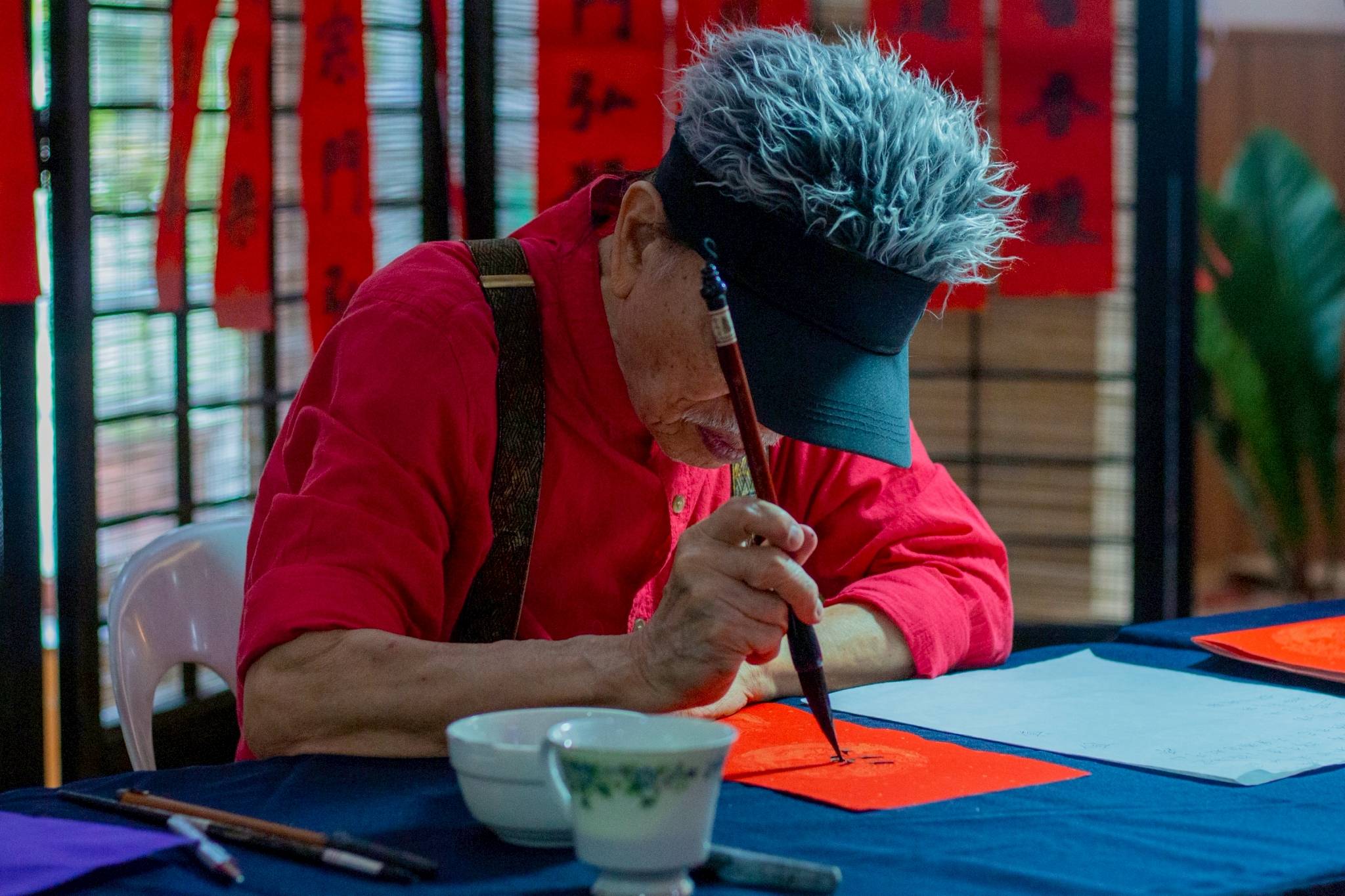 Alfonso Co Ong is one of the regular calligraphers of Tzu Chi’s Year End Blessings.
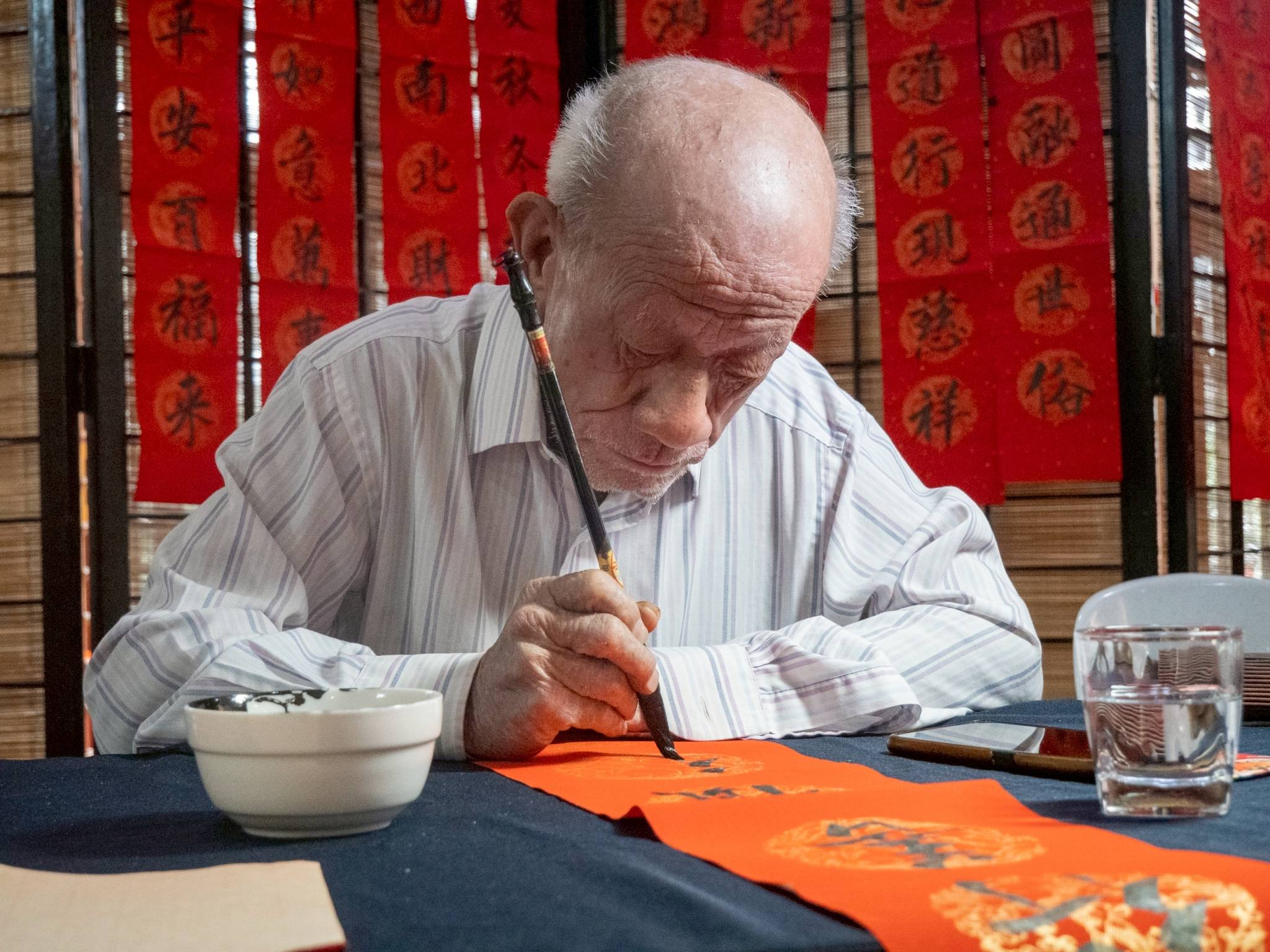 Self-taught calligrapher Chua Hu Hua has been invited to hand-paint scrolls both here and abroad.
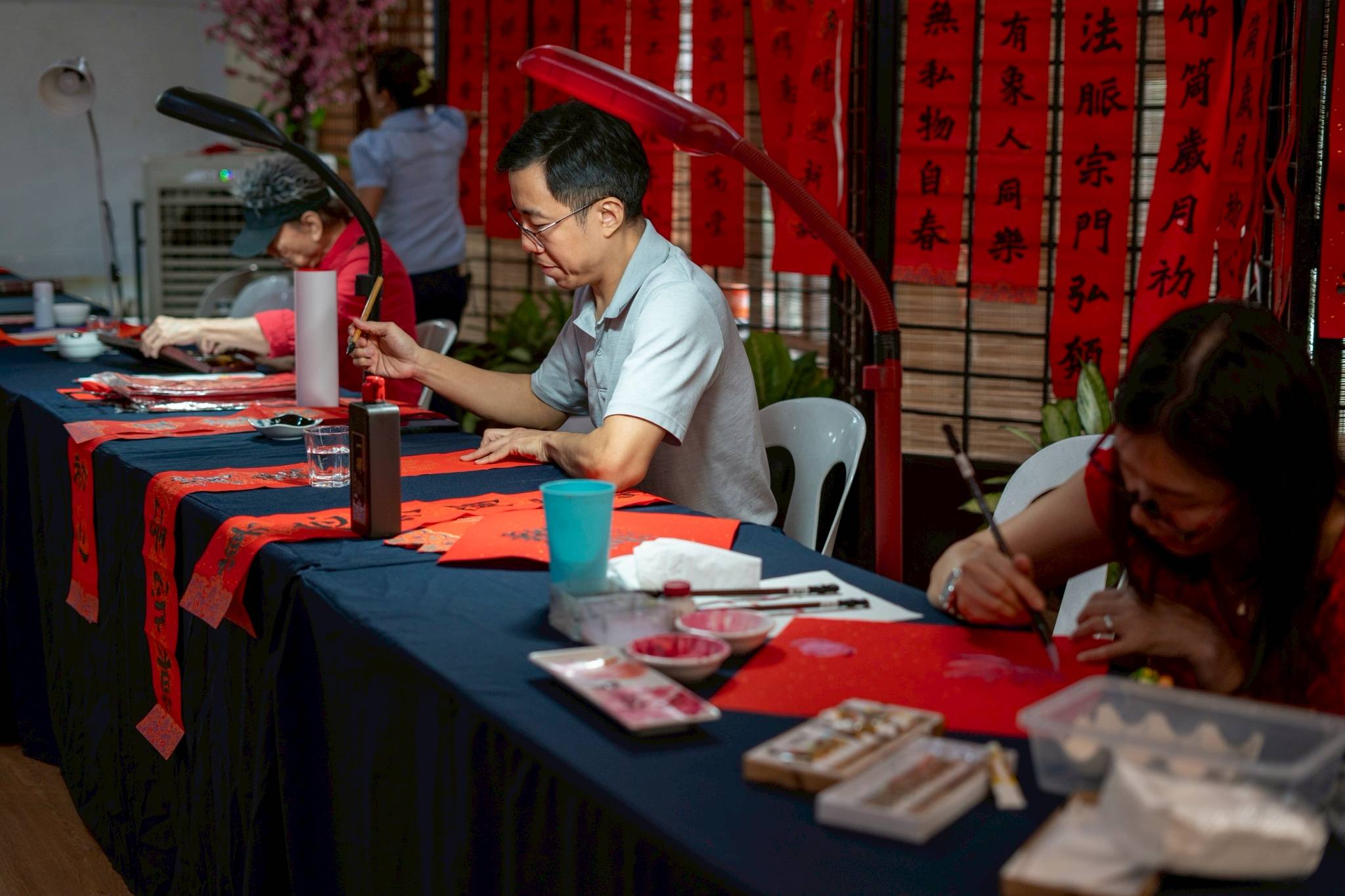 Calligraphers fill red scrolls with affirmations of good health, good fortune, and a virtuous heart and conduct.
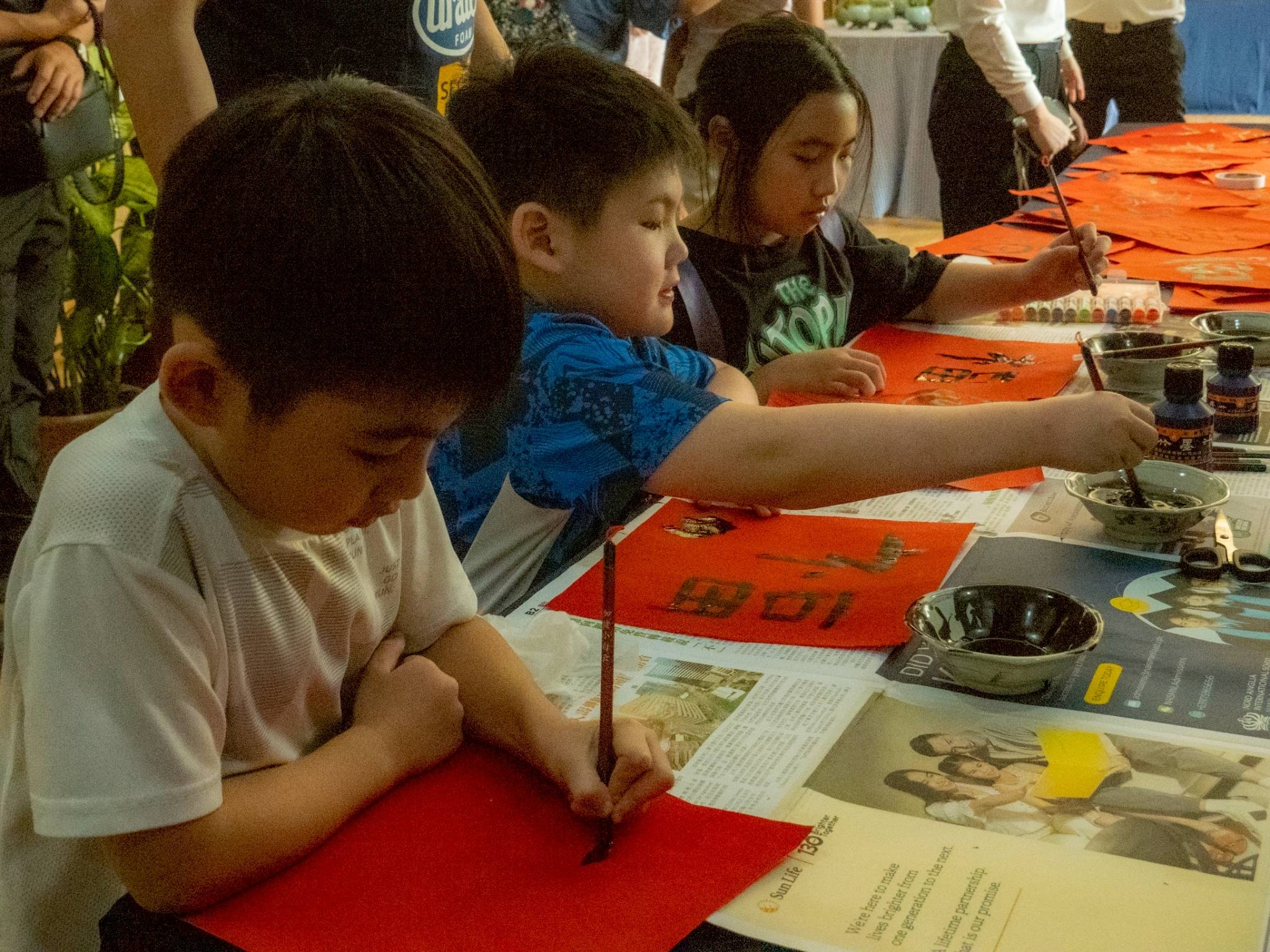 With encouragement and opportunities to practice and learn, these youngsters could be the next generation of calligraphers.
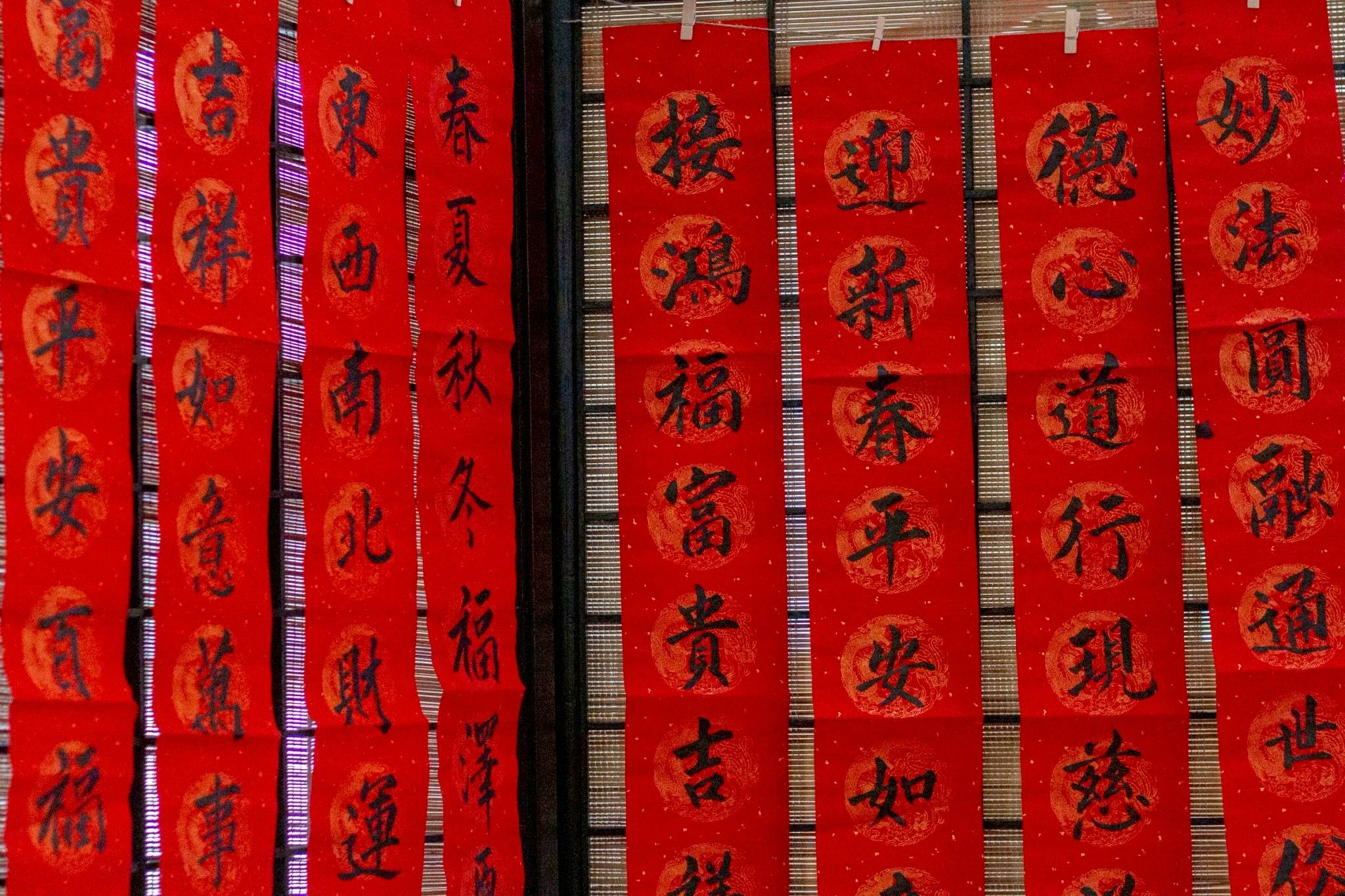 Among the messages hand-painted by calligraphers are “Welcome the new year safely”, “Virtuous heart and virtuous conduct manifest compassion”, and “The wondrous dharma is all-encompassing.”