
Veg Up Culinary Training brings plant-based possibilities to life
Newsflash: From meatless longganisa to plant-based siomai, participants gained hands-on experience transforming familiar dishes into delicious and nutritious vegetarian meals.
By Thania Florendo
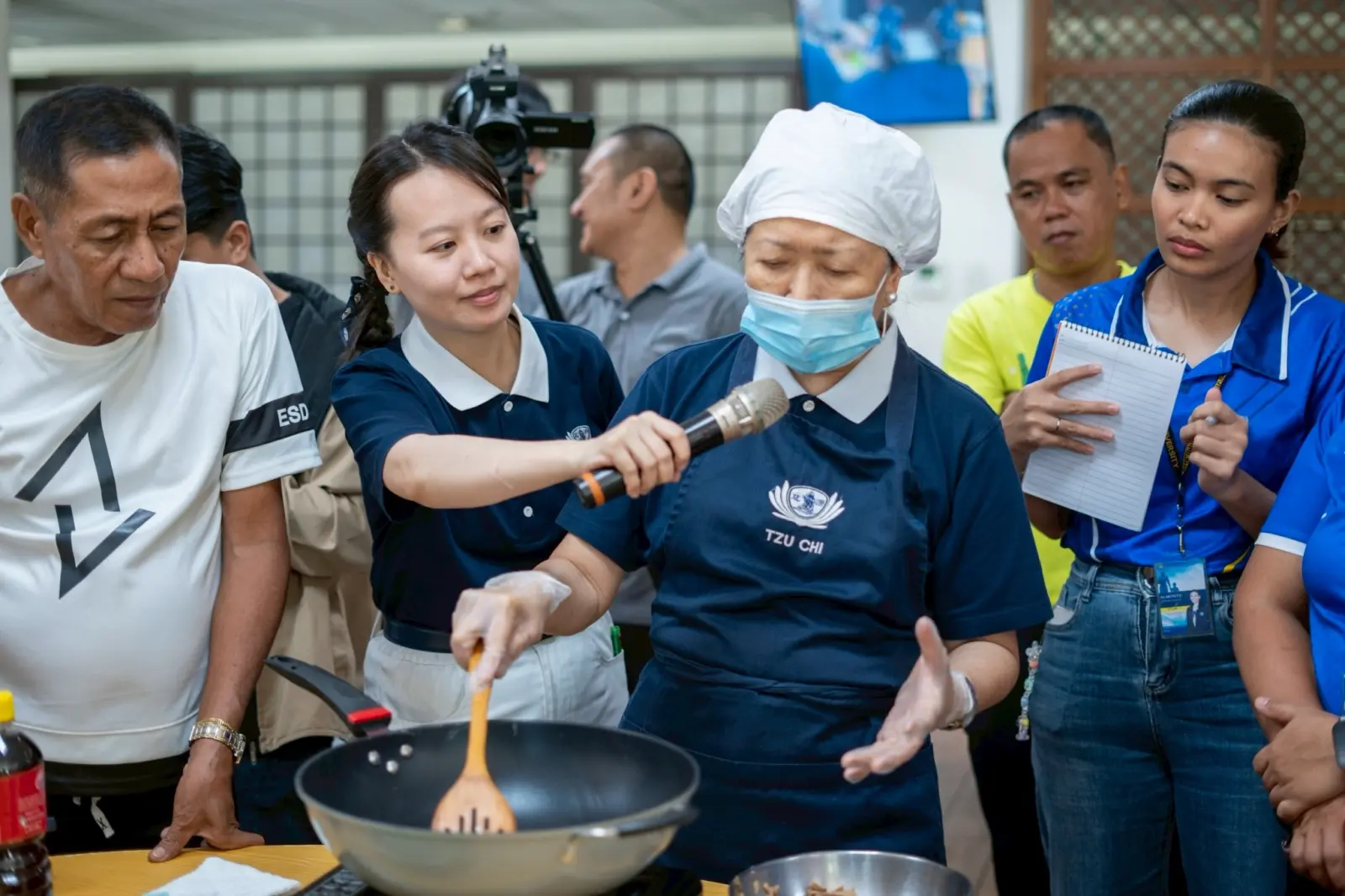
From tasting plant-based possibilities to creating them from scratch, the Veg Up journey continues! Following the successful Pilot Plate event, participants stepped into the kitchen to learn the techniques and culinary secrets behind transforming familiar dishes into flavorful vegetarian meals.
The Veg Up Culinary Training was held on July 17 at the Harmony Hall of the Buddhist Tzu Chi Campus (BTCC) in Sta. Mesa, Manila. The event brought together canteen staff and managers, chefs, cooks, and program officers from schools and organizations interested in introducing more plant-based meals to their communities.
Participants from the Philippine Normal University (PNU), Lakan Dula High School, Bacood Elementary School, Assisi Development Foundation Inc., ASA Philippines Foundation Inc., Project Pearls, and local government unit staff from Gubat, Sorsogon, joined the hands-on training.
Led by Tzu Chi volunteer Sally Yuñez and Tzu Chi kitchen staff, participants simultaneously prepared 10 different vegetarian dishes while learning practical preparation methods, cooking techniques, and ways to make plant-based meals more appealing and nutritious.
Second-time attendee Romulo de Jose, canteen manager of Lakan Dula High School, shared that the training provided him with a deeper understanding of the cooking process and possible alternatives to the food he tasted on his first visit.
“The preparations were organized, and they are thorough in explaining the preparations and cooking time of each dish,” he said. His personal favorite was the salpicao (stir-fried dish using a plant-based protein), which he believes could be included in the school’s cycle menu in the future.
Nenita Espayos, an administrative assistant from the Mayor’s Office of Gubat, Sorsogon, said the training was also an opportunity to bring home ideas that could benefit her local government unit and community. She and her companion were hosted at the BTCC for a two-week immersion, working closely in the kitchen.
“Some of our colleagues visited here in June and they shared how good the food was. Our mayor was inspired, especially that one of his goals is to have healthier constituents, so he sent us here,” Espayos said.
One of her biggest realizations was that parts of vegetables commonly discarded could still be transformed into food.
“I’m really happy and impressed. For example, the hard parts of kangkong stems and banana blossoms, which are often discarded, were transformed into okoy (vegetable fritters). It was really good,” she said.
Chef Noli Estrada of ASA Philippines Foundation did not expect vegetables could transform into and closely resemble familiar food. He was particularly surprised by the possibilities presented by dishes such as bagoong (shrimp paste), salpicao, and tocino (cured pork).
“I’m surprised that it is really possible to serve mouthwatering dishes with only vegan products. I learned about the alternatives like the Textured Vegetable Protein,” he said.
He expressed his appreciation to Tzu Chi volunteers and staff for making the cooking techniques easy to understand.
“I hope more people learn about vegetarian food so they can appreciate and support it. I also hope the Veg Up and its activities continue to expand and reach more people,” he said.
Following the Pilot Plate tasting events, the culinary training aimed to equip participants with the skills and confidence to launch their own Veg Up initiatives in schools and canteens.
“After the Pilot Plate, right now in the culinary training, we wanted them to do a launch of Veg Up in their schools and canteens. Hopefully, with the training, they will be confident to start the initiative in their schools,” Tzu Chi Deputy CEO Peggy Sy Jiang said.
For the program’s future, Tzu Chi is also developing a Veg Up Task Force that will coordinate with participating schools, monitor progress, conduct regular check-ins, and organize follow-up training on more plant-based recipes. The task force will also consider the different needs and systems of organizations involved in feeding programs.
The culinary training marks another step in Veg Up’s continuing efforts to promote a future where plant-based meals are not just an alternative, but a delicious and accessible part of everyday dining.


